You have selected a capsule filling machine, validated its speed and changeover capabilities, and prepared your powder blend. Yet when production begins, fill weights drift—some capsules are overfilled, others underfilled, and the relative standard deviation (RSD) exceeds acceptable limits.
The machine is functioning correctly. The operator is skilled. The problem lies not in the equipment, but in the material itself. Powder density and flow properties are the hidden variables that determine whether a capsule filling run succeeds or fails. Two powders with identical chemical compositions but different physical properties can produce dramatically different fill weight consistencies on the same machine.
This article explains how powder density (bulk and tapped) and flowability (measured by Carr index, Hausner ratio, and angle of repose) affect capsule fill accuracy, why these relationships vary by filling mechanism, and how to characterize your powder before committing to production.
Powder density is not a single number. It exists in two forms, each with distinct implications for capsule filling.
Bulk density is the mass of powder per unit volume, including all void spaces between particles. It represents the powder in its loose, aerated state—as it sits in a hopper or flows into a dosing chamber.
Why it matters: Bulk density determines how much powder enters the dosing cavity during the initial fill stage. A powder with low bulk density contains more air, meaning less actual material per unit volume. If the machine doses by volume (as most capsule fillers do), lower bulk density translates to lower fill weight.
Tapped density is the mass per unit volume after the powder has been mechanically tapped or compacted to remove air and achieve maximum packing. It represents the powder in its densest possible state.
Why it matters: Tapped density indicates how much a powder can be compressed—and how much its density changes under mechanical stress during filling. The ratio between bulk and tapped density reveals the powder’s compressibility and flow behavior.
Research from Rutgers University demonstrated that weight variability decreased with increasing bulk and tapped density. In other words, denser powders—whether in loose or compacted form—tend to produce more consistent fill weights.
A 2014 study published in the International Journal of Pharmaceutics examined twelve powders filled into size 3 capsules using a dosator-nozzle machine. The researchers found that for group I powders (larger particles, higher density, better flowability), fill weight correlated with powder density (bulk and tapped density) as well as nozzle diameter, dosing chamber length, and powder layer depth. The study demonstrated that acceptable RSDs were achievable even for very low doses (4–45 mg).
Flowability describes how easily a powder moves through a hopper, into a dosing chamber, and out of a nozzle. Poor flow is one of the most common causes of fill weight variation.
| Parameter | How It’s Measured | What It Tells You |
|---|---|---|
| Angle of Repose | Height and radius of a powder cone | Higher angle = poorer flow (< 30° = excellent, > 45° = poor) |
| Carr’s Compressibility Index (CI) | (Tapped - Bulk) / Tapped × 100% | Free-flowing: 5–12%; Poor flow: 23–35%; Extremely poor: > 40% |
| Hausner Ratio (HR) | Tapped / Bulk density | Free-flowing: ~1.2; Cohesive: ~1.6 |
| Flow Factor (ffc) | Shear cell measurement | Higher ffc = better flow |
Powder flow properties were identified as the most predominant factors affecting the weight and weight variability in filled capsules. The research showed that weight variability decreased with increasing bulk and tapped density, flow factor (ffc), and basic flow energy (BFE)—while variability increased with compressibility, cohesion, and GDR flow index.
A study on powder flowability as an indication of capsule filling performance found a significant correlation between the coefficient of variation of fill weight (Xcv) and flow parameters, including Carr’s compressibility, Hausner’s ratio, angle of repose, Kawakita’s equation constant, and Jenike’s flow factor.
One of the most important findings from recent research is that the impact of density versus flowability changes with fill weight.
A comprehensive study on dosator nozzle machines found that larger fill weights were more affected by density, while lower fill weights were more affected by flow and friction characteristics. As fill weight decreases, more factors affect capsule fill weight—including wall friction angle, tapped density, and particle shape.
What this means for you:
If you are filling large doses (e.g., 400–500 mg), focus on controlling powder density.
If you are filling low doses (e.g., 20–100 mg), flowability and friction characteristics become the dominant concerns.

Not all capsule filling machines respond to density and flow in the same way. The filling mechanism—whether tamping pin, dosator nozzle, or vacuum drum—interacts differently with powder properties.
Tamping pin machines push pins through a powder bed to form a compacted plug, then eject it into the capsule body.
Density impact: Higher bulk density generally improves fill consistency because the powder bed is more uniform.
Flow impact: The range of powders that can be filled on tamping machines exceeds that applicable to dosator nozzle systems. Poor-flowing powders can often be accommodated by adjusting powder bed height and tamping pin settings.
Key insight: For moderate-flowing powders, the coefficient of fill weight variation appears to be nearly independent of powder bed height or tamping pin setting. This means tamping machines are relatively forgiving for powders with moderate flow properties.
Dosator nozzles dip into a powder bed, collect powder, and transfer it into an open capsule.
Density impact: Fill weight correlates with powder density—particularly for larger fill weights.
Flow impact: For group II powders (very fine, low-density particles with poor flowability and high cohesion), dosator filling was not volumetric. Frictional characteristics (wall friction angle) and flow properties (bulk density and basic flowability energy) influenced the fill mass.
Key insight: Dosator machines are more sensitive to powder properties than tamping machines. Poor-flowing powders are more challenging to fill, especially without automated process control.
| Powder Type | Recommended Mechanism | Reason |
|---|---|---|
| Free-flowing, high density | Either (tamping or dosator) | Both handle well-behaved powders effectively |
| Moderate flow | Tamping pin | More forgiving; fill weight variation nearly independent of settings |
| Poor flow, cohesive | Tamping pin with optimized settings | Can be adjusted via powder bed height and pin settings |
| Low-dose, fine particles | Dosator with automated control | Requires precision; automated control critical for consistency |
Before running production batches, characterize your powder using these steps:
Bulk density: Pour powder into a graduated cylinder, measure volume, and weigh.
Tapped density: Tap the cylinder mechanically (e.g., 500–1000 taps), measure the reduced volume.
Calculate Carr’s Compressibility Index and Hausner Ratio.
Pour powder through a funnel onto a flat surface; measure the height and radius of the resulting cone.
Angle < 30°: Excellent flow
Angle 30–40°: Moderate flow
Angle > 45°: Poor flow
| Bulk Density | Tapped Density | Carr Index | Hausner Ratio | Expected Fill Performance |
|---|---|---|---|---|
| High | High | < 15% | < 1.18 | Excellent consistency |
| Moderate | Moderate | 15–25% | 1.18–1.33 | Moderate—may need process optimization |
| Low | High | 25–35% | 1.33–1.54 | Challenging—requires careful machine settings |
| Low | Very high | > 35% | > 1.54 | Difficult—consider formulation modification |
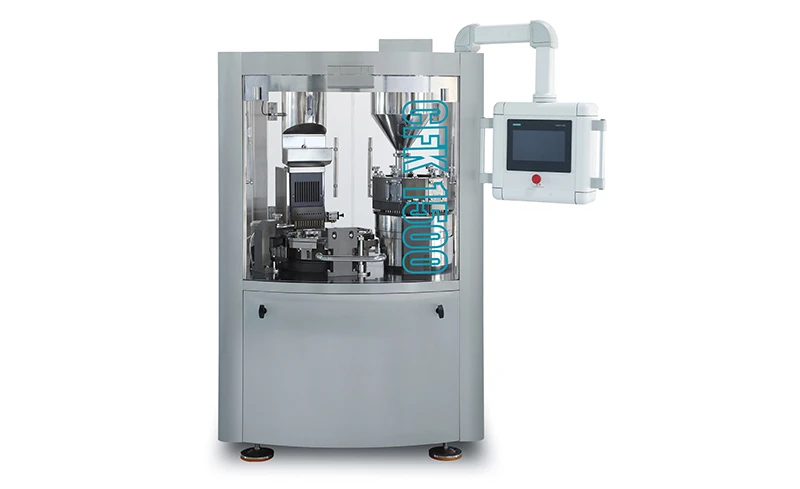
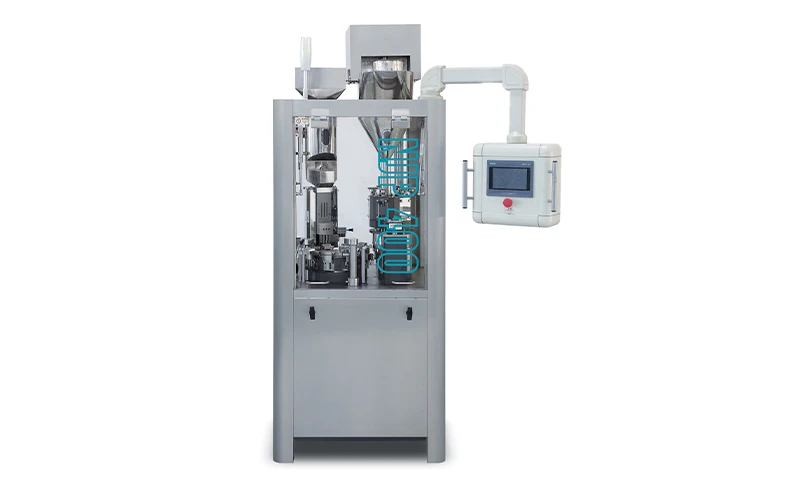
For production environments handling powders with challenging flow properties, understanding how different filling mechanisms accommodate these materials is essential. See how intermittent rotary architectures with tamping pin systems are designed in the capsule filling machine series.
Profile: Bulk density ~0.6 g/mL, tapped density ~0.7 g/mL, Carr index ~14%, Hausner ratio ~1.17.
Expected performance: Excellent fill consistency. Both tamping and dosator machines will achieve low RSD. Density is the primary driver of fill weight, and it is stable.
Machine consideration: Choose based on speed and changeover requirements, not material properties.
Profile: Bulk density ~0.3 g/mL, tapped density ~0.5 g/mL, Carr index ~40%, Hausner ratio ~1.67.
Expected performance: Challenging. Poor flow will cause bridging and inconsistent dosing. Fill weight will be more affected by flow and friction than by density.
Machine consideration: Tamping pin machines with adjustable powder bed height and pin settings offer the best chance of consistent filling. Consider adding glidants (e.g., magnesium stearate, silicon dioxide) to improve flow. Research shows that Carr’s compressibility reached its minimum at 0.4% magnesium stearate, suggesting an improvement of powder flow.
For production lines processing difficult powders requiring tailored processing methods, explore our overview of custom pharmaceutical production line solutions to view equipment configuration layouts.
You now understand that powder density and flow properties are not minor considerations—they are primary determinants of capsule fill accuracy. The key takeaways:
Bulk and tapped density correlate with fill weight; denser powders generally produce more consistent results.
Flowability (measured by Carr index, Hausner ratio, and angle of repose) is the most predominant factor affecting weight variability.
The impact of density vs. flow changes with fill weight: larger doses are density-driven, lower doses are flow-driven.
Filling mechanism matters: tamping pin machines are more forgiving for poor-flow powders than dosator nozzle systems.
Once you have characterized your powder using bulk density, tapped density, Carr index, and angle of repose measurements, you can make an informed decision about which machine architecture—and which filling mechanism—will deliver the fill accuracy your product requires.
How to validate fill weight accuracy during capsule machine commissioning
Understanding fill weight RSD: acceptable ranges for powders vs pellets vs granules
Intermittent vs continuous rotary capsule machines: which motion fits your material?
Powder flow characterization methods—what to test before choosing a machine
Understanding capsule size 00 to 5 for machines—how size affects fill weight

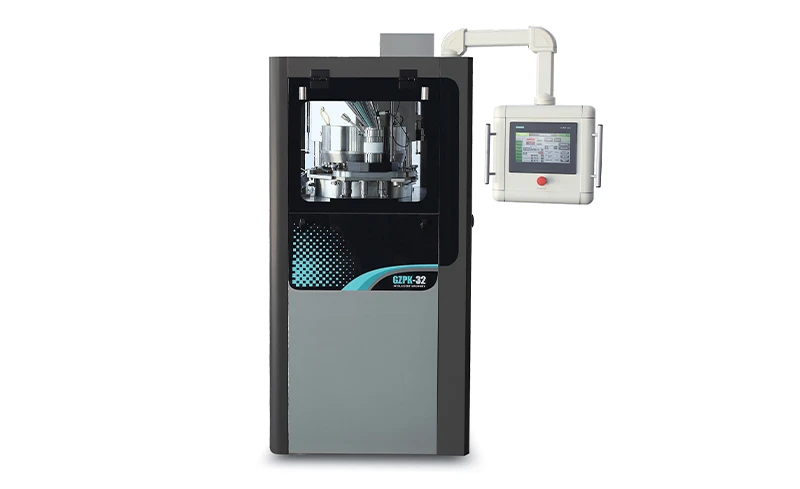
No. of station:26/32/40
Max.tablet diameter:25/16/13mm
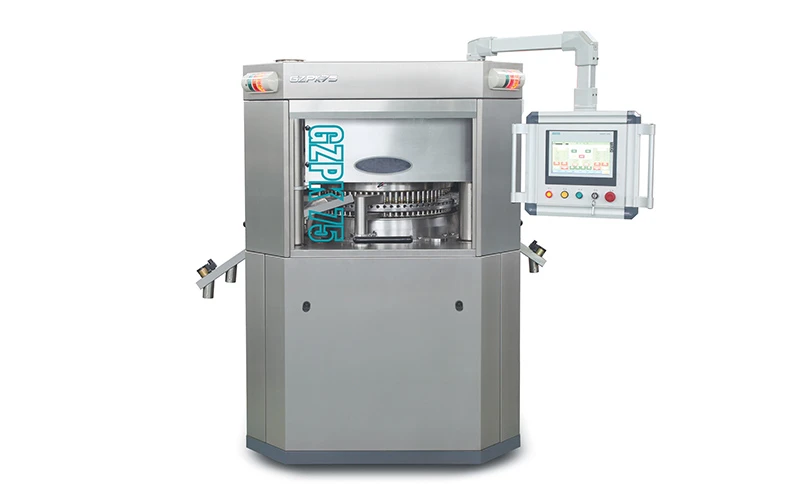
No. of station:45/55/75
Max.tablet diameter:25/16/13mm
24/7 Online Technical Support
One-Year Warranty and Spare Parts Coverage
Lifetime free technical consulting service
GET A QUOTE