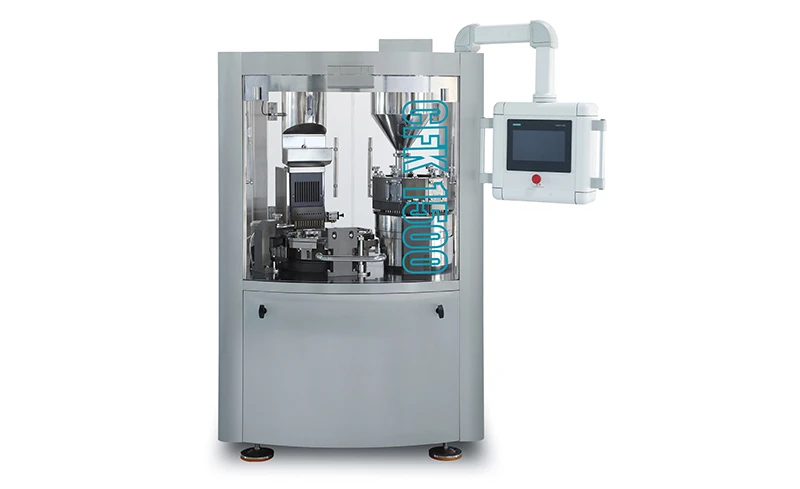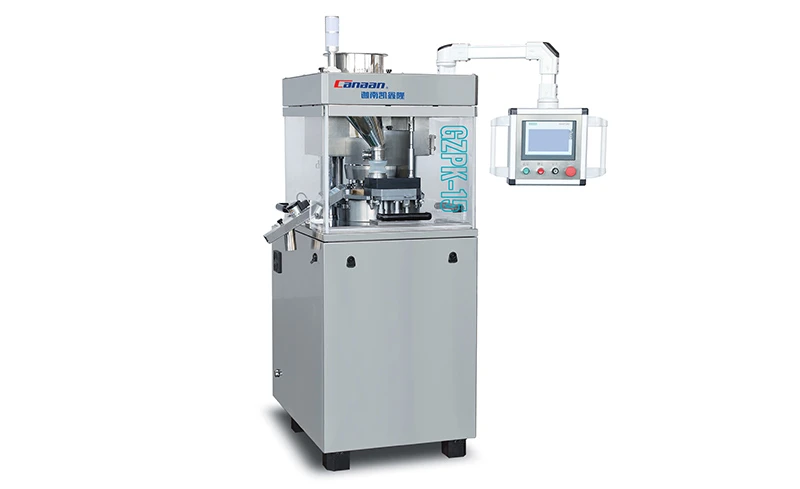
You have secured the budget and identified the need for a capsule filling machine. The next step should be straightforward—compare specifications, select a supplier, and place the order. Yet purchasing complex pharmaceutical machinery requires more than just reading a spec sheet.
The global capsule filling equipment market was valued at approximately US$227 million in 2024 and is projected to reach US$328 million by 2031, growing at a compound annual growth rate of around 6.0%. This growth reflects increasing demand for pharmaceutical and nutraceutical products, as well as advancements in capsule filling technology. With more options than ever, the risk of making the wrong choice is equally high.
This article presents seven critical questions to ask before purchasing a capsule filling machine. These questions go beyond the brochure—they address real-world technical considerations that directly impact your production efficiency, product quality, and long-term operational costs.
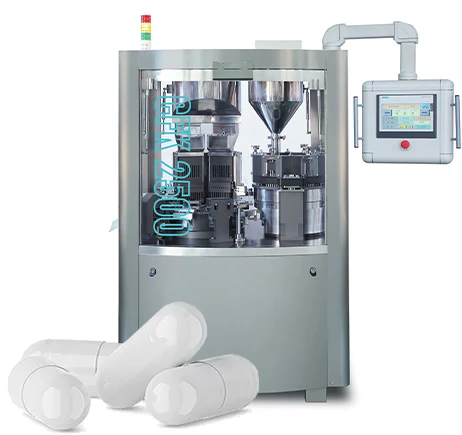
Speed is often the first specification buyers examine. But the number quoted on a brochure—often labeled “maximum speed” or “theoretical speed”—rarely reflects what the machine will actually produce with your specific capsule size and formulation.
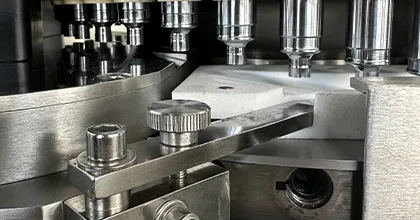
Why this matters: Many suppliers quote the same maximum speed for all capsule models, which is highly unprofessional. For larger capsules, such as size 00 or 000, the number of die holes that can be installed on the machine’s turret is limited (for example, from 25 holes down to 16 holes), which directly reduces throughput. A machine rated at 150,000 capsules per hour may only achieve 120,000–130,000 capsules per hour with larger capsule sizes.
What to ask:
What is the machine’s actual, stable production rate for each capsule size I plan to use (00, 0, 1, 2, 3, 4, 5)?
How does the speed change when running different material types (powders vs granules vs pellets)?
Can you provide a factory acceptance test (FAT) using my own capsules and materials to validate the speed claim?
What it means for you: A machine that cannot meet your required throughput with your specific capsule size will create production bottlenecks. Understanding actual speed—not theoretical speed—is essential for accurate production planning.
Not all capsule fillers are created equal when it comes to material compatibility. Some machines excel with free-flowing powders but struggle with cohesive materials. Others handle pellets well but perform poorly with fine powders.
Why this matters: According to industry sources, the type of capsule fill (dry running powder, liquid or semisolid, pellets, minitablets, or a combination) and the physicochemical properties of the drug will dictate the choice of equipment. Material properties such as particle size, density, hygroscopicity, and the presence of flow agents are critical selection criteria.
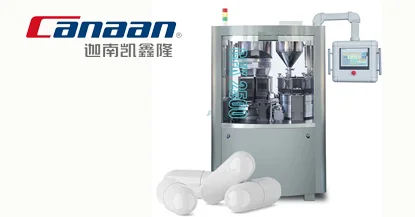
Kaixinlong’s automatic capsule filling machine, for example, supports filling powder and granules of 00#–5# capsules, and can be equipped with automatic capsule feeding machines, vacuum loading machines, inspection machines, polishing machines, and other auxiliary equipment. The machines employ intermittent rotary mechanisms and packing quantitative filling methods.
What to ask:
What filling mechanisms does the machine use (tamping pin, dosator, vacuum, gravity)?
Has the machine been tested with materials similar to mine (flow characteristics, particle size, hygroscopicity)?
Can the machine handle multiple material types without extensive changeover?
What is the fill weight accuracy (±%) for each material type?
What it means for you: A machine that cannot handle your primary material will produce inconsistent fill weights, leading to rejected batches, wasted materials, and regulatory compliance issues. If you plan to run multiple formulations, ensure the machine can accommodate the range of material behaviors you expect.
Precision and dosing accuracy are the most critical performance metrics for any capsule filler. Inaccurate dosing can lead to under- or over-filled capsules, which is unacceptable in pharmaceutical production.
Why this matters: Advanced dosing systems in modern machines can achieve tolerances of ±5–10 mg for powders. High-end pharmaceutical models may boast even tighter tolerances. However, accuracy is not just about the machine’s capability—it is about how consistently that accuracy is maintained over time, across different materials, and under production conditions.
What to ask:
What is the documented fill weight variability (RSD or tolerance range) for my target fill weight and material?
What in-process controls does the machine have (in-line weighing, sensors, automatic rejection of off-spec units)?
How often does the machine require calibration, and how is calibration performed?
What happens when fill weight drifts—does the machine automatically adjust or require manual intervention?
What it means for you: A machine with poor fill weight accuracy will generate rejected capsules, waste expensive materials, and potentially trigger regulatory scrutiny. Look for machines with feedback systems that catch drifts early. Consistency is the goal—not just accuracy on a single run.
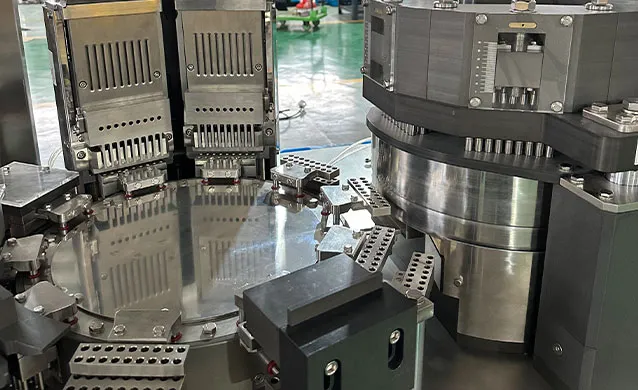
Cleaning is often an afterthought in equipment selection—until the first batch changeover reveals that the machine takes hours to disassemble, clean, and reassemble.
Why this matters: GMP (Good Manufacturing Practices) compliance requires thorough cleaning between batches to prevent cross-contamination. A machine that is difficult to clean will increase downtime, reduce overall equipment effectiveness, and potentially create compliance risks.
What to ask:
Does the machine have a segmented capsule cleaning station (compressed air + vacuum) to remove powder residue after each ejection?
How long does a full cleaning cycle take (disassembly, cleaning, drying, reassembly)?
Are critical parts (dosing pins, molds, hoppers) easy to access and remove for cleaning?
What cleaning methods are recommended (manual wipe-down, wash-in-place, dry cleaning)?
Does the machine design prevent powder from entering sensitive areas (sealed bearings, enclosed station turntables)?
What it means for you: Machines with built-in cleaning features—such as compressed air and vacuum systems that automatically purge die holes after each ejection—reduce downtime for manual cleaning and improve weight consistency. Kaixinlong machines feature enclosed station turntables with imported silicone sealing rings to reduce powder ingress into the turntable, ensuring smooth operation and high precision.
Your production needs today may not be your production needs tomorrow. A machine that is perfectly sized for current batch volumes may become a bottleneck—or an underutilized asset—as your business evolves.
Why this matters: The global capsule filling equipment market is expected to grow at a CAGR of 6.0% from 2025 to 2031, reflecting increasing demand for pharmaceutical and nutraceutical products. Industry 4.0 technologies such as IoT, AI, and machine learning are increasingly being integrated into capsule filling equipment. Modern machines are evolving toward high-speed precision, modular flexibility, intelligent traceability, and cleanliness compliance.
What to ask:
Can the machine be upgraded to a higher capacity (e.g., adding stations, increasing speed)?
Does the machine support multiple capsule sizes (00#–5#) with quick-change molds?
Can the machine accommodate different filling types (powders, granules, pellets, liquids) with modular attachments?
What Industry 4.0 features are available (data logging, remote monitoring, predictive maintenance)?
Is the machine compatible with auxiliary equipment I may add later (automatic capsule feeders, vacuum loaders, metal detectors, polishing machines)?
What it means for you: A flexible machine that can grow with your business protects your investment and avoids the need for premature replacement. Quick-change mold systems—such as those on Kaixinlong machines—allow rapid changeovers between capsule sizes, reducing downtime and supporting diverse production needs.
Buying a capsule filling machine is not a one-time transaction. It is the beginning of a long-term relationship with the equipment supplier. The quality of support can make the difference between smooth production and persistent headaches.
Why this matters: Purchasing complex pharmaceutical machinery requires more than just a spec sheet. Reputable manufacturers will provide material certifications and comply with standards like ISO, CE, or FDA guidelines. Look for machines certified to FDA, CE, or cGMP standards, with key parts (like product hoppers) meeting quality requirements.
What to ask:
Can I visit the factory and see the machine in operation (factory acceptance test)?
Can I send my own capsules and powders (several kilograms) for testing at your factory before purchase?
What training is provided for operators and maintenance staff?
What is the warranty period, and what does it cover?
What is the availability of spare parts (lead time, inventory)?
Is technical support available 24/7, and in which languages?
What it means for you: A supplier that offers transparent factory testing, comprehensive training, and reliable after-sales support reduces your operational risk. Some experienced buyers suggest that finding a dependable supplier requires careful evaluation of factory credentials, not just online presence.
The purchase price is the most visible cost, but it is rarely the highest cost over the machine’s lifetime. Operating costs—labor, maintenance, consumables, downtime, and material waste—often exceed the initial investment.
Why this matters: Automatic machines may have a higher initial investment but generally offer a more favorable return on investment for high-volume production due to reduced labor costs and material waste. However, the extent of those savings depends on how well the machine fits your specific operation.
What to ask:
What is the machine’s energy consumption (total power)?
What is the air consumption and vacuum requirement?
How often do wearing parts (dosing pins, seals, molds) need replacement, and what do they cost?
How much material is lost during changeover and cleaning?
What is the expected maintenance schedule and cost?
What auxiliary equipment is required (and its cost) to achieve full production capability?
What it means for you: A machine with a lower purchase price but higher operating costs can be more expensive over five years than a higher-priced machine with lower operating costs. Calculate total cost of ownership based on your expected production volume, labor rates, and material costs.
These seven questions form a comprehensive framework for evaluating capsule filling machines. Use the table below as a quick reference during supplier evaluations:
| Question | What to Verify | Red Flag |
| 1. Actual speed | Speed for your capsule size, not theoretical max | Supplier quotes same speed for all sizes |
| 2. Material compatibility | Test results with your materials | No testing available or data provided |
| 3. Fill weight accuracy | Documented RSD/tolerance for your fill weight | Accuracy claims without supporting data |
| 4. Cleaning and GMP | Cleaning time, built-in cleaning features | Machine is difficult to disassemble |
| 5. Future flexibility | Upgrade paths, modular design | Machine is fixed-configuration only |
| 6. Supplier support | Factory visit, testing, training, warranty | No factory access or testing offered |
| 7. Total cost of ownership | Operating costs, not just purchase price | Supplier focuses only on price |
For a deeper look at how different machine architectures address these seven questions—particularly speed, material compatibility, and cleaning—explore the automatic capsule filling machine series.
These seven questions are designed to help you move beyond marketing claims and make an informed, data-driven decision. The right capsule filling machine is not necessarily the fastest or the cheapest—it is the one that best matches your production requirements, material characteristics, and operational constraints.
Once you have answers to these questions from potential suppliers, you can begin comparing specific models based on documented performance data—not just brochure specifications. Consider requesting factory acceptance tests using your own capsules and materials to validate the answers you receive.
How an automatic capsule filling machine works—step-by-step process
Understanding fill weight RSD: acceptable ranges for powders vs pellets vs granules
Intermittent vs continuous rotary capsule machines: which motion fits your material?
How to calculate true batch cost including changeover and cleaning time

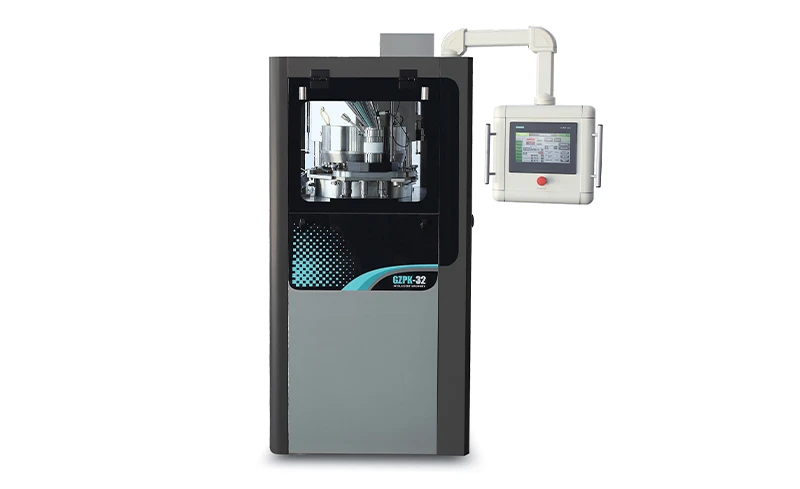
No. of station:26/32/40
Max.tablet diameter:25/16/13mm
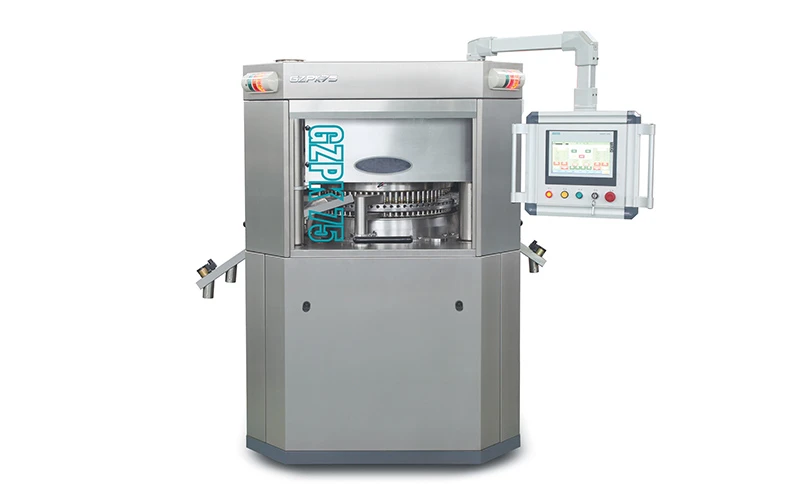
No. of station:45/55/75
Max.tablet diameter:25/16/13mm
24/7 Online Technical Support
One-Year Warranty and Spare Parts Coverage
Lifetime free technical consulting service
GET A QUOTE