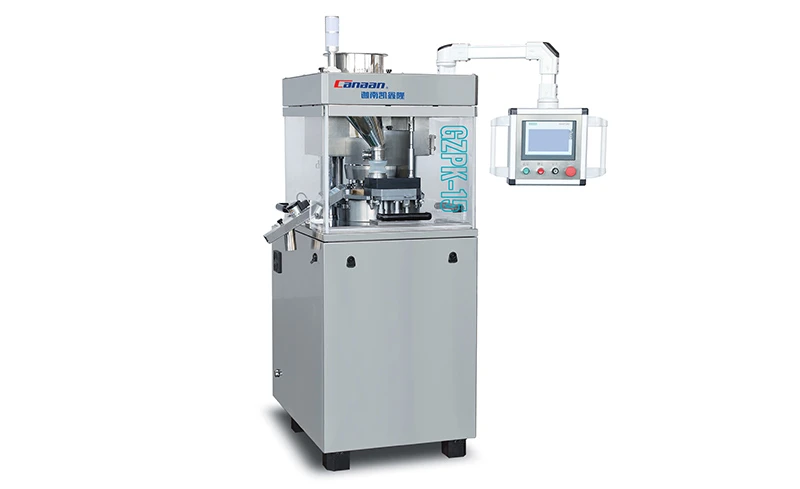
You see a capsule filling machine in operation: empty shells go in one end, finished capsules come out the other—hundreds of thousands per hour. But what actually happens inside? How does the machine separate capsule caps from bodies, fill them with the precise dose, and reassemble them without spilling a single granule?
Understanding the working principle of an automatic capsule filling machine is more than technical curiosity. It helps you diagnose production issues, evaluate different machine architectures, and communicate effectively with equipment suppliers.
This article explains the complete capsule filling process step by step, describes the key filling technologies used in modern machines, and shows how each stage contributes to final product quality.
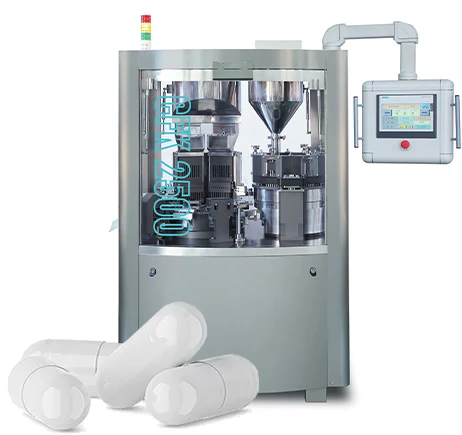
Automatic capsule filling machines operate through a systematic sequence of stages. While different manufacturers may arrange these stages slightly differently, the core process remains the same. The machine's intermittent rotary indexing system moves capsules through each station in a controlled, step-by-step motion.
Empty hard capsules are loaded into a hopper in bulk. They are then fed into an orientation mechanism—typically a series of slots or a rotating disc with holes that match the capsule diameter.
Using mechanical sorting or vacuum-based systems, the machine aligns each capsule so that its body (the longer half) points downward and its cap (the shorter half) points upward. A vacuum then pulls the cap upward, separating it from the body.
The separated capsule bodies move forward for filling, while the caps are held in a separate segment, waiting to be reunited later.
This is the core of the operation. The machine dispenses a precise dose of powder, granule, or pellet material into each capsule body. The specific filling mechanism varies by machine design—more on this below.
Many modern capsule fillers can accommodate multiple fill types. For multiparticulate systems (pellets, microtablets, or mini-tablets), an additional station may fill these discrete units into the capsule body before or after powder filling. This flexibility allows manufacturers to create complex formulations—such as a capsule containing both immediate-release pellets and sustained-release beads.
In machines using the tamping pin principle, the filled powder is compressed within the capsule body to achieve consistent density and remove air pockets. This step is critical for achieving uniform fill weight and preventing powder segregation during downstream handling.
Quality control begins during the filling process. The machine automatically detects and rejects capsules that fail to separate properly, are damaged, or have other visible defects. This early rejection prevents defective units from progressing through the production line.
After filling, the capsule bodies and caps are brought back together. The caps are lowered onto the bodies and pressed into place, forming a secure closure. This may involve a mechanical lock or, for some applications, a light seal to prevent leakage or contamination.
The finished capsules are ejected from the machine onto a conveyor or collection tray. From here, they proceed to downstream processes such as polishing (to remove excess powder), visual inspection, and packaging.
The heart of any capsule filling machine is its dosing system. Different technologies are used depending on the material type and required precision. Most modern machines employ one of the following principles.
This is the most widely used filling method in high-speed capsule fillers. The machine pushes pins through a powder bed to compact powder into a dosing disc, which is then ejected into the capsule body.
How it works:
Powder is fed onto a rotating dosing disc containing multiple holes
Tamping pins descend into the powder, compressing it into the holes to form powder plugs
The filled disc rotates to the transfer station
Ejection pins push the powder plugs into the waiting capsule bodies below
Key advantage: Tamping pin machines can handle a wide range of powder types—from free-flowing to cohesive. The fill weight can be adjusted by controlling pin depth, powder bed height, and machine speed.
The dosator principle is employed by numerous fully automatic capsule filling machines. A dosator consists of a hollow metal tube with a spring-loaded adjustable piston that is volumetrically adjusted to capture the powder dose.
How it works:
The dosator descends into the powder bed
The piston retracts, drawing powder into the tube
The dosator moves to the capsule body
The piston extends, ejecting the powder plug into the capsule
Key advantage: Dosator systems can fill very small doses—as low as 100 µg—with high precision, making them suitable for low-dose active pharmaceutical ingredients.
Some machines use vacuum to draw powder or pellets into a metering tube or disc. This is particularly useful for pellets or granules that might be damaged by compression.
Advanced machines may incorporate volumetric fillers (measuring by volume) or gravimetric methods (measuring by weight) to achieve accurate dosing. These systems are often integrated with real-time feedback controls to maintain consistent fill weights.
Modern automatic capsule filling machines are not purely mechanical. They integrate sophisticated control systems that monitor and adjust the filling process in real time.
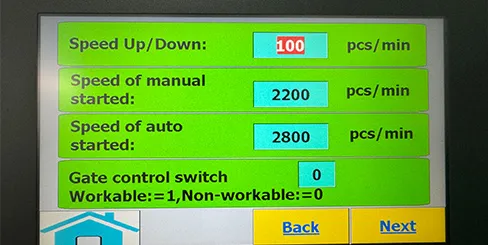
Machines like those in Kaixinlong's CFK and NJP series feature industrial-grade touch interfaces that support intelligent regulation and real-time monitoring. Operators can:
Set fill volume, speed, and other parameters
Monitor production data and detect deviations
Save and recall recipes for different products
Troubleshoot issues through the interface
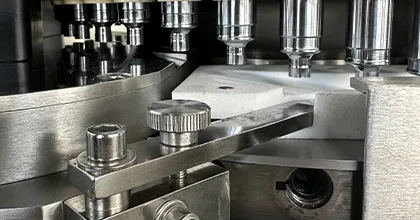
Precision indexing is critical for accurate capsule filling. The indexing box controls the intermittent rotary motion, ensuring each station aligns perfectly with the capsules. High-precision indexing and rigid design ensure accurate and stable capsule production.
Quality control is built into the automatic capsule filling process at multiple levels.
In-Process Monitoring
Advanced sensors monitor fill weight, capsule integrity, and other parameters during production. If a deviation is detected, the machine can automatically stop or reject faulty capsules.
100% In-Process Net Weight Control
Some systems incorporate 100% in-process net weight control to ensure that every capsule contains the correct dose. This is particularly important for potent drugs where dosage accuracy directly affects patient safety.
Rejection Systems
Capsules that fail to meet quality criteria—such as underfilled, overfilled, damaged, or improperly sealed units—are automatically rejected and removed from the production line.
Traceability
Modern machines integrate with digital management systems to track every production stage from raw materials to finished products. This traceability supports regulatory compliance and quality assurance.
Here is what happens during a single capsule filling cycle on a typical intermittent rotary machine:
| Step | Action |
|---|---|
| 1 | Empty capsules are inserted and separated |
| 2 | Capsule bodies move forward; caps are held |
| 3 | Powder or granules are filled into bodies |
| 4 | (Optional) Pellets or tablets are added |
| 5 | Tamping pins compress the powder |
| 6 | Faulty capsules are ejected |
| 7 | Caps are lowered, and capsules are closed |
| 8 | Finished capsules are discharged |
| 9 | The segment is cleaned for the next cycle |
This cycle repeats continuously, with the indexing box controlling the precise timing of each movement.
For a deeper look at how intermittent rotary indexing filling is implemented across different capacity ranges, explore the Automatic capsule filling machine series →.
The choice of filling technology has real implications for production success.
Need: High speed, consistent fill weights, minimal operator intervention.
Recommended filling principle: Tamping pin / dosing disc. This method handles large volumes efficiently and maintains consistent fill weights across long production runs.
Need: Precision dosing, minimal material waste, ability to handle cohesive powders.
Recommended filling principle: Dosator or precision micro-dosing system. These systems can fill very small doses accurately without requiring bulking agents.
Need: Gentle handling to avoid pellet damage, ability to fill discrete particles.
Recommended filling principle: Vacuum or gravity-based filling, with optional pellet filling stations.
For production environments requiring specific filling technologies matched to material type, see how configurations are approached in the solutions overview for pharmaceutical manufacturing →.
You now understand the complete working principle of an automatic capsule filling machine: capsule separation and orientation, powder (or pellet) filling, tamping, quality control, closing, and ejection. You also know the key filling technologies—tamping pin, dosator, and vacuum-based systems—and how each serves different material types and production requirements.
Once you have identified your primary material type, required fill weight range, and target output, you can begin comparing specific machine configurations. Review how different series implement the filling principle that matches your material—tamping pin for powders, vacuum or gravity for pellets—and how their control systems support your quality and traceability needs.

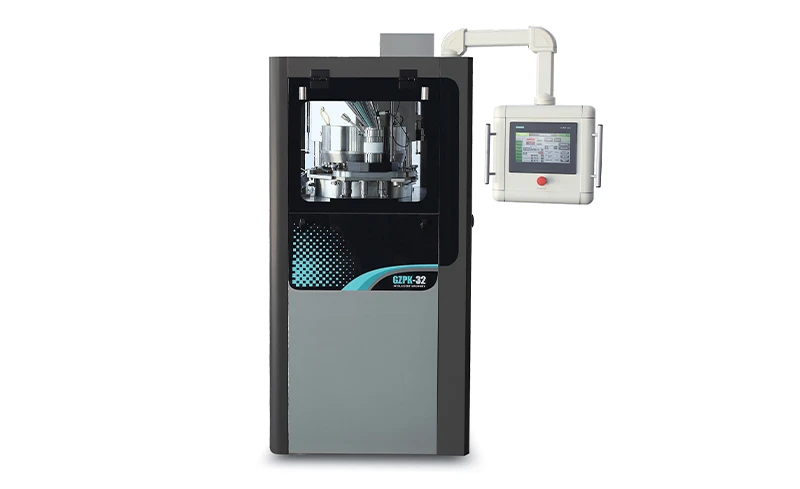
No. of station:26/32/40
Max.tablet diameter:25/16/13mm
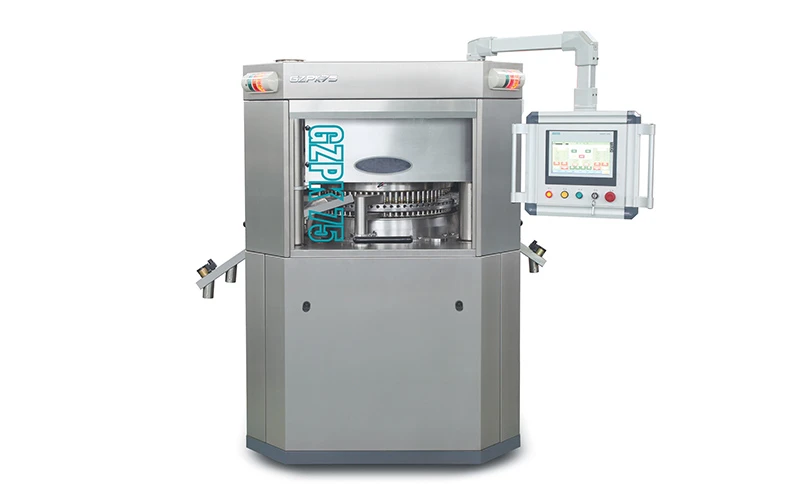
No. of station:45/55/75
Max.tablet diameter:25/16/13mm
24/7 Online Technical Support
One-Year Warranty and Spare Parts Coverage
Lifetime free technical consulting service
GET A QUOTE