Your automatic capsule filling machine has been running smoothly for months. Then, slowly at first, you notice fill weights becoming less consistent. The standard deviation creeps up. Capsules occasionally fail to separate. Jams become more frequent. You check the powder blend, calibrate the dosing station, and replace worn tooling—but the problems persist.
What you're experiencing is a classic symptom of indexing box degradation, a component that most buyers never think about until it fails. Yet according to a 2023 reliability study, indexing mechanism degradation accounts for approximately 23% of unscheduled downtime events on high-speed filling lines—while fewer than 15% of facilities have preventive inspection protocols specifically for this component.
This article explains what the indexing box does, how to recognize when it's failing, and how to maintain it to prevent the frequent downtime that erodes your production efficiency.
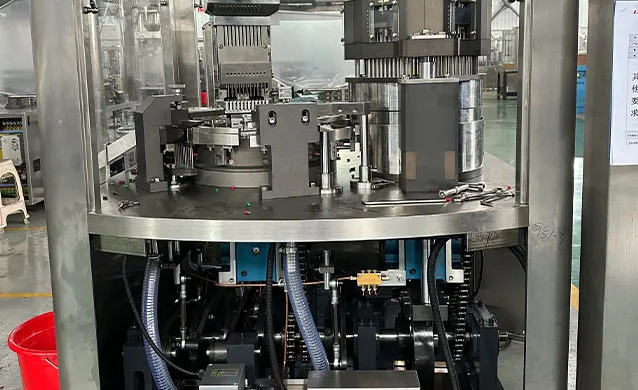
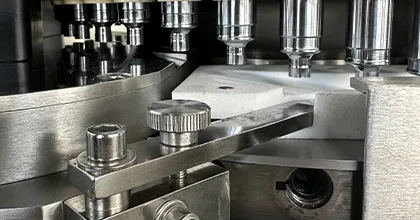
Every intermittent rotary capsule filler relies on one critical component to coordinate motion: the indexing box (also called a cam indexer or indexing drive). The motor runs continuously through a reducer, and the filling turntable produces intermittent movement through the indexing box. This component converts continuous motor rotation into precise, start-stop movement.
Each time the machine advances from station to station—loading capsules, separating caps from bodies, filling, tamping, sealing, and ejecting—the indexing box decides exactly when to move, how far to travel, and when to pause.
Think of it as the conductor of an orchestra. When the conductor keeps perfect time, every musician plays together. When the conductor drifts, the music falls apart.
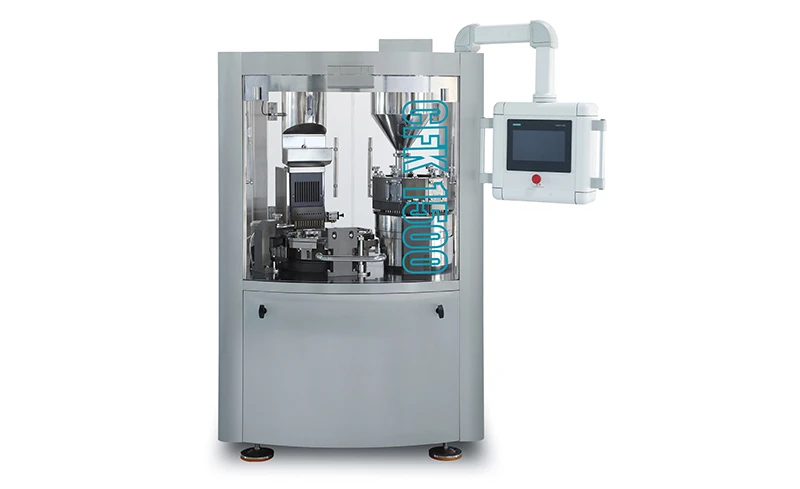
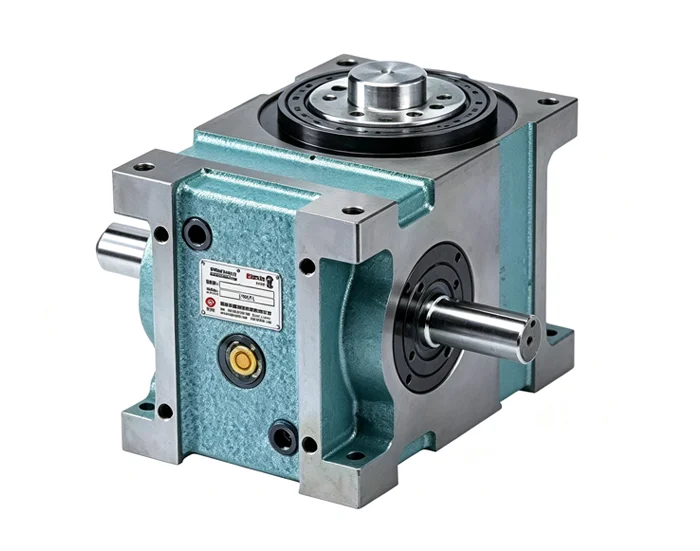
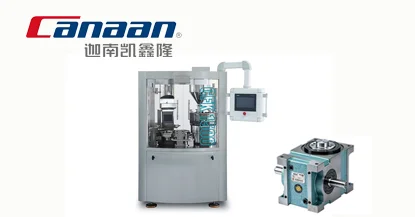
The high-precision indexing box ensures the accuracy of the capsule filling machine's position during each indexing action. This means that positioning will be more precise, ensuring consistency in the final product. The NJP 800, for example, combines RU180 and RU140 indexing boxes to greatly improve stability and service life, while the CFK 2500 uses a DF110 and DF80 combination for the same purpose.
To see how different indexing box configurations are implemented across machine series, explore the automatic capsule filling machine product line.
When an indexing box loses accuracy, the symptoms show up everywhere except the indexing box itself.
If the turret doesn't stop at exactly the same position each cycle, dosing pins don't penetrate to the same depth. A variation of just 0.5mm in pin depth can change fill volume by 3-5%, depending on powder density. Your average fill weight may remain stable, but your standard deviation grows—a classic sign of indexing drift.
The vacuum system expects the capsule body and cap to be in precise alignment at the separation station. When indexing drifts, the vacuum cup misses the cap edge by fractions of a millimeter. Capsules fail to open.
The sealing station applies heat and pressure at a specific turret position. If the capsule arrives late or early by even 2-3 degrees of rotation, the sealing dwell time changes. Under-sealed capsules leak; over-sealed capsules show burn marks.
When the indexing box's positioning accuracy declines, the entire machine's timing is thrown off. Abnormal faults can lead to "timing" errors of each cam—the action sequence of each mechanism becomes misaligned, causing interference between moving parts.
One contract manufacturer spent eight weeks debugging intermittent sealing failures, replacing heaters, recalibrating sensors, and changing capsule suppliers. The problem vanished only after they discovered their indexing box had developed 0.3mm of radial play—barely detectable but enough to shift capsule position at the sealing station by nearly 1mm.
A well-maintained indexing box can operate reliably for thousands of hours. Preventive maintenance follows a clear schedule:
Weekly: Check the transmission chain tension and add an appropriate amount of grease. The index plate drive chain should be checked and greased weekly.
Weekly: Grease the contact surface between the cam and needle bearing.
Monthly: Check the oil level in the indexing box.
| Maintenance Task | Frequency | Details |
|---|---|---|
| Check oil level | Monthly | Top up if insufficient |
| Change lubricating oil | Every 6 months | Use 90# machine oil |
| Replace indexing box oil | Every 3,000 hours of operation | According to experience, 90# oil is generally used |
| First oil change (new machine) | 500-1,000 hours | About 5-6 months of operation |
When changing drug batches or after prolonged downtime, parts that come into direct contact with the drug (e.g., upper and lower capsule holes, sealing guide rings) should be cleaned thoroughly. For the cam indexer specifically:
Clean the surface of the cam groove line and rollers regularly
Use a dust-free soft cloth or compressed air
Prevent moving parts (such as index dials and needle roller bearings) from becoming jammed
Not all indexing boxes are created equal. The difference shows up in three specific areas:
Standard indexing boxes use case-hardened steel for cam tracks. High-grade units like the Taiwan Xiangsheng DF series employ through-hardened alloy steel with specialized surface treatments. The practical difference? A standard box might hold precision for 8,000-10,000 operating hours. A DF-series box typically exceeds 25,000 hours before measurable wear appears.
Many designs use single-row bearings that concentrate stress on small contact areas. High-grade configurations use paired bearing arrangements that spread forces across larger surfaces.
The combination of RU180 and RU140 indexing boxes in machines like the NJP 800 greatly improves stability and service life. Advanced designs use "internal cam" mechanisms instead of traditional lever-driven filling transmissions, making the machine run more quietly and stably.
If you notice any of these symptoms, the indexing box should be on your suspect list:
| Symptom | What It Indicates |
|---|---|
| Fill weight RSD increasing over time | Indexing drift causing inconsistent pin depth |
| Capsules failing to separate | Misalignment at separation station |
| Intermittent sealing defects | Capsule position shifting at sealing station |
| Abnormal noise or reverse impact | Cam wear or bearing damage |
| Indexing failure or skipped stations | Cam indexer malfunction |
| ±10 wire (0.01mm) indexing accuracy error | Needle roller bearing wear |
When abnormal vibration or indexing accuracy is found (such as ±10 wire error), it is necessary to stop the machine for calibration or replace the worn needle roller bearing. If there is abnormal noise, reverse impact, or indexing failure, stop the machine immediately and contact the manufacturer for maintenance—do not adjust the axial position without authorization.
Profile: A facility that follows a strict preventive maintenance schedule. Oil is changed every 6 months and every 3,000 operating hours. Weekly chain inspections and greasing are documented. The indexing box's performance is monitored through fill weight trending.
Result: The machine runs consistently for years. The indexing box reaches 25,000+ hours before showing measurable wear. Downtime is minimal.
Profile: Maintenance is only performed when something breaks. Oil changes are irregular. Fill weight drift is attributed to "powder issues" until the problem becomes severe.
Result: A manufacturing manager in Chicago discovered his indexing box had degraded when fill weight variation crept from ±2% to nearly ±6% over six months. His yield had dropped 9% without explanation. The machine "still runs. It still produces capsules. But the positional accuracy at each station slowly degrades".
You now understand that the indexing box is the unsung hero of your automatic capsule filling machine—and when it fails, the symptoms appear everywhere except the indexing box itself. The key takeaways:
Preventive maintenance saves money: Regular oil changes (every 6 months / 3,000 hours) and weekly inspections prevent catastrophic failures.
Monitor fill weight trending: If your average fill weight remains stable but your standard deviation grows, suspect indexing drift before blaming powder flow.
Invest in quality components: High-grade indexing boxes (like the Taiwan Xiangsheng DF series) can last 25,000+ hours—more than double the lifespan of standard units.
Act on early warning signs: Abnormal noise, indexing errors, and increasing fill weight RSD all warrant immediate investigation.
Once you have established a preventive maintenance schedule and understand the early warning signs of indexing box wear, you can dramatically reduce unscheduled downtime and maintain consistent product quality.
To understand how fill weight accuracy is validated during commissioning—and how indexing box precision affects that validation—read the guide: How to validate fill weight accuracy during capsule machine commissioning.
5 Warning Signs Your Indexing Box Needs Immediate Inspection
Preventive Maintenance Schedule for Capsule Fillers: A Component-by-Component Guide
How to Diagnose Indexing Box Positioning Errors: A Step-by-Step Troubleshooting Flow
Lubrication Best Practices for Rotary Indexing Drives in High-Speed Capsule Fillers
The Link Between Indexing Precision and Fill Weight RSD: What the Data Shows

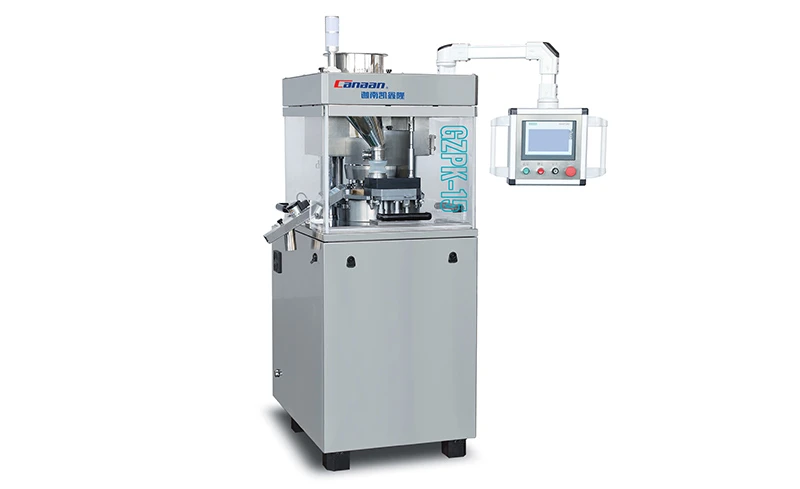
No. of station:26/32/40
Max.tablet diameter:25/16/13mm
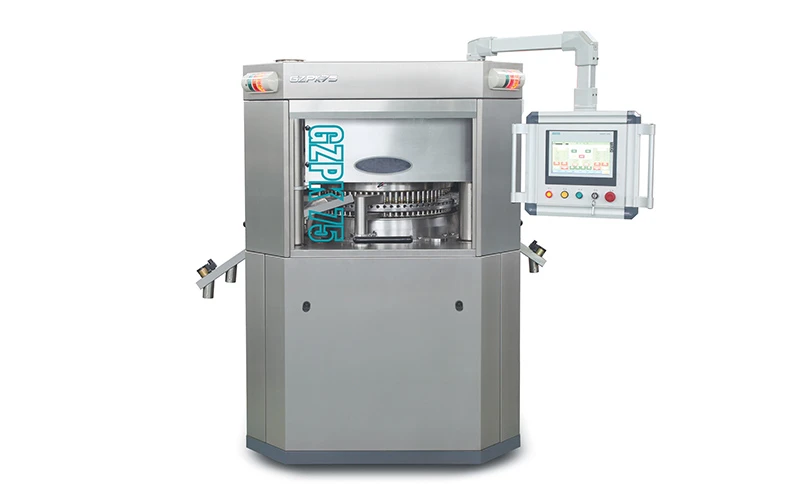
No. of station:45/55/75
Max.tablet diameter:25/16/13mm
24/7 Online Technical Support
One-Year Warranty and Spare Parts Coverage
Lifetime free technical consulting service
GET A QUOTE