Every supplement brand founder remembers the exact week their business outgrew manual filling. For Sarah, it was when a major retailer requested 200,000 bottles of her ashwagandha formula—due in 18 days. Her team of six could hand-fill maybe 8,000 capsules per shift. The math didn't work.
That moment forces a hard question: What automated filling equipment actually delivers on batch consistency without demanding a pharmaceutical engineering degree to operate?
Pharmaceutical manufacturers typically run the same formula for months. Nutraceutical brands do the opposite. One morning you're filling magnesium glycinate (free-flowing, predictable). After lunch, it's probiotic blends that clump if you look at them wrong. Wednesday brings mushroom powder complexes with particle sizes ranging from talc-fine to coarse grind.
This variety destroys two assumptions that traditional filling machinery relies on: consistent flow rates and predictable dosing density.
According to a 2024 industry survey by Nutritional Outlook, 67% of supplement contract manufacturers identify "equipment changeover flexibility" as their top purchasing criterion—ranking higher than raw speed. The brands burning out operators and missing deadlines aren't using slow machines. They're using rigid ones.
Let me clear up a common misconception. Switching from manual to automated filling doesn't just increase speed. It fundamentally changes how you manage powder handling and quality control.
Manual filling gives you visual feedback with every capsule. You see when powder clumps, when moisture causes sticking, when tamping force needs adjustment. The downside? Human inconsistency. One operator might over-tamp by instinct; another under-fills to move faster.
Automated systems eliminate that variability through mechanical consistency. But they also remove the operator's eyes. That means your machine needs better sensors and more forgiving dosing mechanisms.
The sweet spot for most supplement brands is intermittent rotary filling. Unlike continuous-motion designs that rush each station, intermittent machines pause at each position. That extra split-second allows tricky botanical powders to settle completely before moving to the next stage.
Equipment specifications tell a story, but not always the one you think. Here's what to look for:
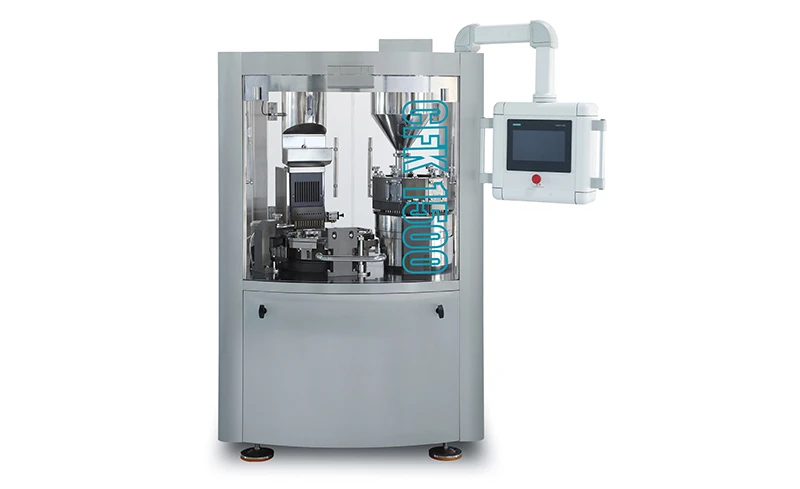
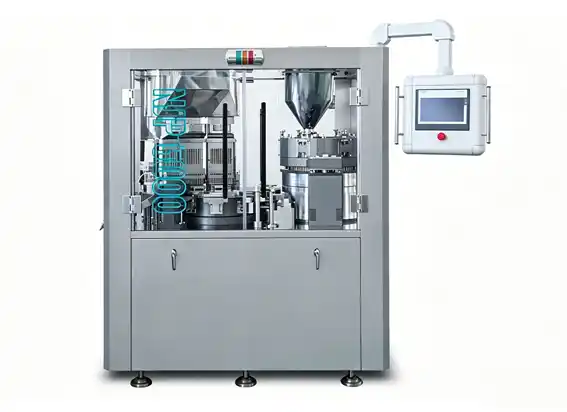
Segment bore count directly affects your changeover speed. An 11-station machine like the CFK-1500 requires more frequent refills but cleans faster. A 25-bore design runs longer between stops but takes more time to disassemble. Match this to your average batch size, not your dream batch size.
Capsule size range from 00# to 5# seems standard until you realize how many machines claim compatibility but struggle at the extremes. The difference shows up in filling error rates—watch for ±3% or better across the full range.
Siemens touch screen interfaces aren't just about aesthetics. They determine how quickly your team learns the system and how many training hours you burn. A poorly designed UI can add 15 minutes to every recipe change. Over 200 changeovers annually, that's 50 hours of lost production.
Here's a conversation I've had with a dozen supplement brand owners: "We bought a machine that said 'quick change' on the brochure, but it still takes our lead operator 90 minutes to swap molds."
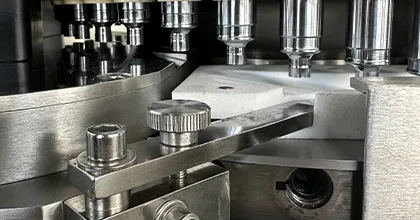
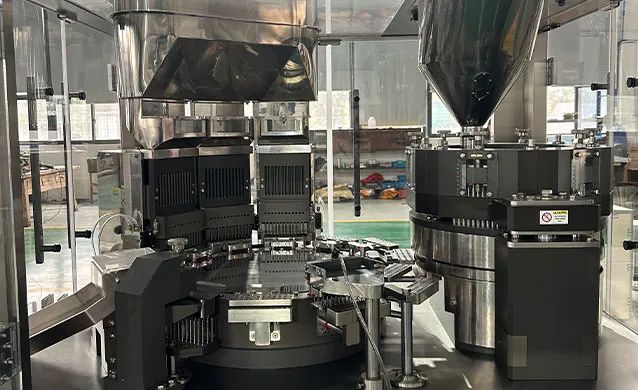
Real quick-change systems share three characteristics. First, they use guided alignment pins rather than threaded fasteners. Second, the metering plate and copper ring assembly lifts out as a single unit. Third, adjustments after reinstallation are minimal or zero.
One vitamin manufacturer in Colorado tracks their changeovers obsessively. After switching to a system with modular molds, their average changeover dropped from 73 minutes to 22. The math: 156 changeovers annually × 51 minutes saved = 132 hours of recovered production time. That's three extra weeks of output without adding shifts.
Explore quick-change mold configurations designed for supplement producers running diverse product lines.
Based on watching dozens of supplement brands scale up, here are the failures I see repeatedly:
Mistake #1: Buying for peak speed instead of typical speed. That 7,500 capsules-per-minute machine looks impressive until you realize you never run it above 3,000 because your powder blend can't feed that fast. Match machine capability to your powder flow characteristics, not marketing numbers.
Mistake #2: Skipping the vacuum feeder. Adding powder manually to the hopper seems fine during trials. In production, every time you open the hopper, you introduce contaminants and interrupt the dosing vacuum. A closed-loop vacuum loading system pays for itself in reduced waste within six months.
Mistake #3: Forgetting about dust control. Fine powders become airborne during filling. Without proper collection, that dust settles on sensors, clogs moving parts, and represents lost product. Look for machines with sealed station turntables and integrated dust extraction ports.
The most practical advice I can offer: buy for your volume in 12 months, not your volume today. But also don't buy for your volume in 60 months.
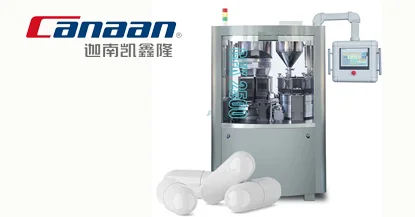
A CFK-1500 (11 bores) suits brands producing 50,000-200,000 capsules daily. It fits on a standard pallet, runs on 220V single phase, and one person can move it with a pallet jack. Perfect for the "we just landed our first retail account" phase.
The NJP series enters at 36 bores (5000 model) and scales to 54 bores (7500 model). These require dedicated space, compressed air (0.4-0.7 Mpa), and vacuum ( -0.03 to -0.06 Mpa). But they also integrate with automatic capsule feeders, metal detectors, and polishing equipment—building a true production line rather than an isolated machine.
Between these extremes, the CFK-2500 and 3500 (both 25 bores) hit the sweet spot for most contract manufacturers. Enough capacity for serious volume, but not so large that cleaning becomes a multi-hour ordeal.
Nutritional supplements face stricter cross-contamination risks than many pharmaceutical products. Switching from a soy-based protein to a wheatgrass blend requires complete removal of any residue. Hidden powder traps become lawsuit risks.
Examine how the dosing station disassembles. Can you reach every surface with a spray bottle and wipe? Are there blind holes where powder collects? The three-dimensional adjustment mechanism on better designs eliminates the natural deformation of metering plates and copper rings, which also eliminates the gaps where powder hides.
One organic supplement producer learned this the hard way. Their first machine had 14 internal crevices requiring disassembly with three different tools. Cleaning took two hours. Their current system has accessible surfaces throughout, and sanitation requires 25 minutes.
Your filler doesn't operate alone. Before purchasing, map out how it connects to:
Automatic capsule feeders (bottom tube with compressed air connection)
Vacuum loading systems (for powders, requiring 2.7m+ ceiling height)
Capsule polishers (for removing surface dust and static)
Metal detectors (integrated foreign object removal)
The complete auxiliary equipment lineup shares mounting interfaces and control protocols. Mixing brands across these components creates integration headaches—different voltage requirements, incompatible safety circuits, and warranty gaps where each supplier blames the other.
Walk onto any production floor and you'll spot the difference between brands that planned their scale versus those that reacted to it. The planners have machines with room to grow—extra bore capacity, standardized auxiliary connections, control systems that speak to their ERP.
The reactors have machines that worked perfectly for their first product but choke on their seventh.
Start by documenting your three most challenging powder formulations. Send samples to potential equipment suppliers and ask for test runs. Watch how each machine handles the clumpy, sticky, or statically-charged blends that actually show up on your line. Then choose the equipment that handles your worst-case scenario, not your best.
If you're currently running 100,000 capsules weekly and projecting 500,000 within two years, discuss your specific production profile with application engineers who understand supplement manufacturing. The right machine grows with you. The wrong one becomes an expensive obstacle you'll replace in 18 months.

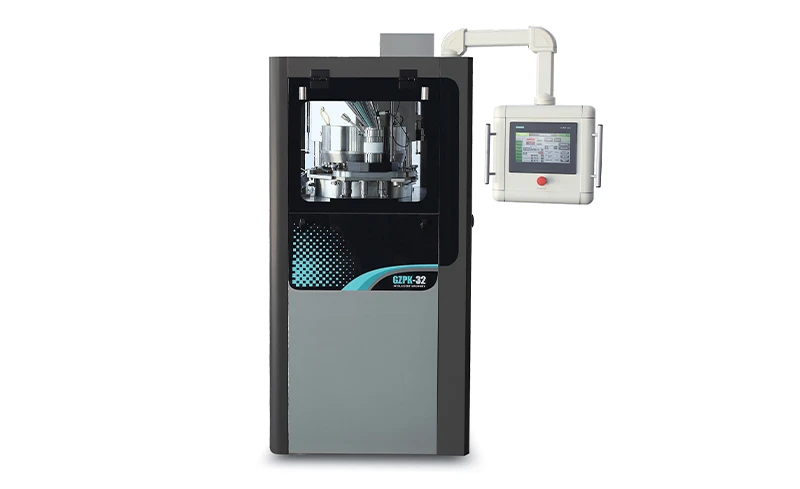
No. of station:26/32/40
Max.tablet diameter:25/16/13mm
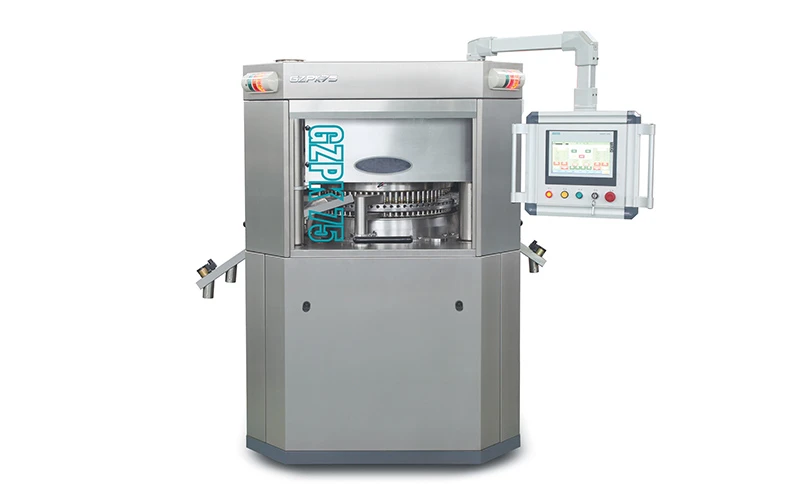
No. of station:45/55/75
Max.tablet diameter:25/16/13mm
24/7 Online Technical Support
One-Year Warranty and Spare Parts Coverage
Lifetime free technical consulting service
GET A QUOTE