You have a 10,000-square-foot facility, three pending purchase orders from major distributors, and a production target of 2 million capsules per shift. The last thing you need is a bottleneck at the filling station. Yet many operations discover too late that their "high-speed" machine chokes the moment batch sizes cross the half-million mark.
The real difference between surviving and thriving at scale isn't just about raw speed. It's about sustained throughput, changeover realities, and whether your equipment handles continuous production runs without degrading dosing uniformity.
Before comparing specifications, let's talk about what actually stops production lines:
Heat buildup is the first culprit. Many rotary machines generate enough friction after 90 minutes of continuous operation to soften gelatin capsules. The result? Misaligned caps, powder spillage, and an operator standing by with a scraper. According to industry data from PMMI, unplanned downtime costs pharmaceutical manufacturers an average of $2,500 per minute on high-capacity lines.
Powder segregation follows close behind. Free-flowing blends containing particles of different sizes naturally separate during extended vibration. One contract manufacturer in New Jersey documented a 4.2% fill weight variation increase between the first and third hour of a run—enough to reject an entire pallet.
Maintenance access rounds out the trio. Some designs require removing three panels and a safety interlock just to reach the dosing station. When that cam follower needs replacement at 2 AM, every extra bolt costs you sleep and revenue.
Let me clarify something that spec sheets obscure: peak output numbers assume ideal conditions—perfectly round pharma-grade granules, consistent room temperature, and operators who have run the same SKU for months. Real-world production environments rarely match that profile.
Intermittent rotary mechanisms address the heat problem by design. The pause between each index allows the turret assembly to shed thermal buildup. I've seen intermittent machines run 11-hour shifts on moisture-sensitive formulations that would have turned gummy inside continuous-motion equipment.
The 54-segment bore configuration matters here, but not for the reason most engineers assume. More stations don't automatically mean more output. What they provide is redundancy. If one dosing pin picks up a clump, fifty-three others maintain overall fill accuracy. This becomes critical when running expensive API powders where every milligram over target eats your margin.
Here's where experience separates speculation from reality. High-volume lines that run two shifts daily typically change over 3-5 times per week. Each changeover costs 1.5-3 hours depending on machine architecture. Multiply that by 50 weeks, and suddenly a 2-hour difference per changeover represents 300-500 hours of annual production time.
The enclosed station turntable with imported silicone sealing rings isn't a glamorous feature. But it directly addresses the most time-consuming part of changeover: cleaning powder residue from bearing surfaces. Traditional open designs allow fine dust to migrate into moving parts. The enclosed approach keeps contamination where it belongs—in the hopper, where vacuum systems can remove it.
I watched a facility manager demonstrate their changeover process on a standard machine versus an enclosed design. The standard required 47 minutes to clean and reassemble. The enclosed: 18 minutes. That difference, repeated three times weekly, adds up to 75 hours of recovered production time annually.
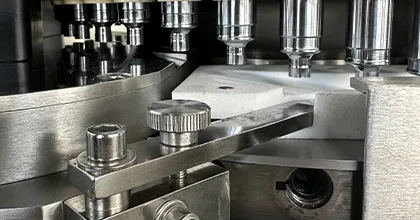
Instead of bolting together off-the-shelf components, Kaixinlong rebuilt their mechanical foundation around real-world pharmaceutical demands. The DF110 and DF80 grade indexing box combination creates what engineers call "adaptive resistance"—the transmission automatically adjusts to load variations rather than fighting them.
The inner groove cam represents the most significant departure from conventional designs. Traditional machines use lever-based filling mechanisms that rely on spring tension. Springs fatigue, break, and lose calibration. The cam-driven approach eliminates this failure point entirely. One Indian generic drug manufacturer reported 11,000 hours of operation on their NJP series without a single cam-related service call.
What about dosing accuracy across different capsule sizes? The 3D chassis adjustment mechanism solves the deformation problem that plagues metering plates and copper rings. When you switch from #00 to #4 capsules, uniformity hesitates. This design maintains consistent clearance automatically. The result: filling error rates staying within ±3% to ±7% across the full 00#-5# range, verified during third-party audits.
Explore the mechanical architecture details that enable this consistency.
High-volume production rarely operates in isolation. You'll need capsule polishers, metal detectors, and vacuum loading systems. The mistake? Buying these as afterthoughts and struggling with integration.
Automatic bag feeders with compressed air connections eliminate manual capsule loading—a task that becomes physically demanding at 7,500 capsules per minute. The feeder automatically starts and stops based on hopper levels, which means one less task for your line operator.
Vacuum feeders become essential when your facility has ceiling heights under 2.7 meters. The compact design fits constrained spaces while maintaining closed-loop safety for hazardous compounds. For facilities with more headroom, lifter feeders solve stratification problems by mixing materials during transfer—critical when your blend contains components with different particle densities.
The complete auxiliary equipment lineup includes polishing options ranging from basic dust removal to sorting polishers that reject empty shells and separated bodies.
Let me share three numbers you won't find highlighted in most brochures:
≤80 dB(A) noise rating matters if your operators work 10-hour shifts. That's quieter than a standard vacuum cleaner and well below OSHA's 85 dB action level for hearing protection. Compare this to older rotary designs that routinely hit 92 dB, requiring mandatory ear protection and complicating verbal communication.
18 kW total power consumption seems high until you calculate per-capsule energy costs. At 7,500 capsules per minute, you're producing 450,000 capsules hourly. That translates to roughly 0.04 watt-hours per capsule—trivial compared to your HVAC or compressed air system.
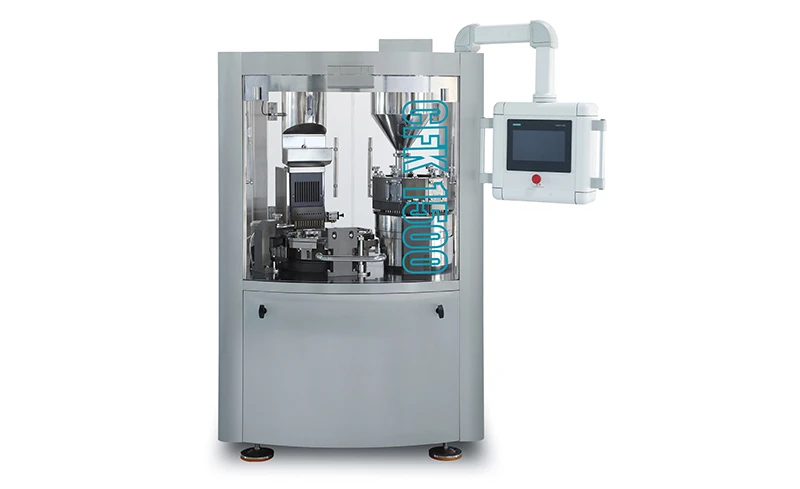
1884mm × 1404mm footprint with additional clearance requirements. The 530mm extension on length and 275mm on width accounts for panel access. I've seen buyers forget this detail and end up with equipment that technically fits but can't be serviced without moving adjacent machinery.
Every production manager asks the same question: "When does 7,500 capsules per minute actually pay off?" Run the math on three scenarios:
Single-product facilities running the same SKU for 18+ hours daily see payback in 4-6 months through reduced labor and overtime avoidance.
Multi-product lines with frequent changeovers should calculate payback based on changeover time savings rather than peak speed. A machine that saves 90 minutes per changeover on 200 annual changeovers recovers 300 hours—equivalent to 12.5 production days.
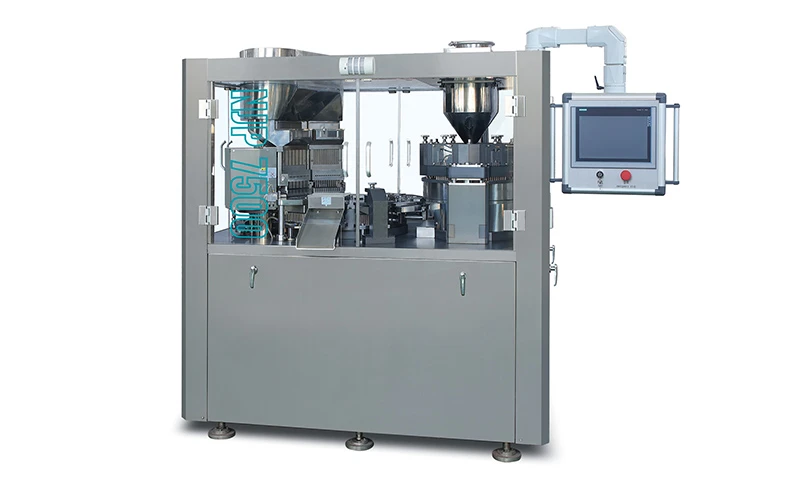
Contract manufacturers face a different calculation: utilization rate. A machine that sits idle 60% of the time never pays for itself regardless of speed. The NJP-7500's 54-segment design maintains efficiency down to 35% utilization because the indexing mechanism doesn't require full-load conditions to operate smoothly.
Request a customized payback analysis using your actual batch sizes, changeover frequency, and labor rates.
High-volume capsule filling comes down to a single question: Does your equipment maintain dosing consistency across the eighth hour as precisely as the first? Everything else—speed, automation features, noise levels—matters only after that baseline requirement is met.
The best operators I've worked with don't chase theoretical maximums. They stabilize output at 85-90% of rated speed and focus on uptime, changeover speed, and maintenance predictability. That approach consistently yields higher annual throughput than pushing any machine to its redline.
If your production forecasts show consistent growth above 300 million capsules annually, start evaluating intermittent rotary platforms with 50+ stations. The flexibility to run everything from small-dose prescription capsules to large herbal supplements on one machine protects you from market shifts. And when you're ready to scale further, the auxiliary integration paths already exist—you're not redesigning your line from scratch.

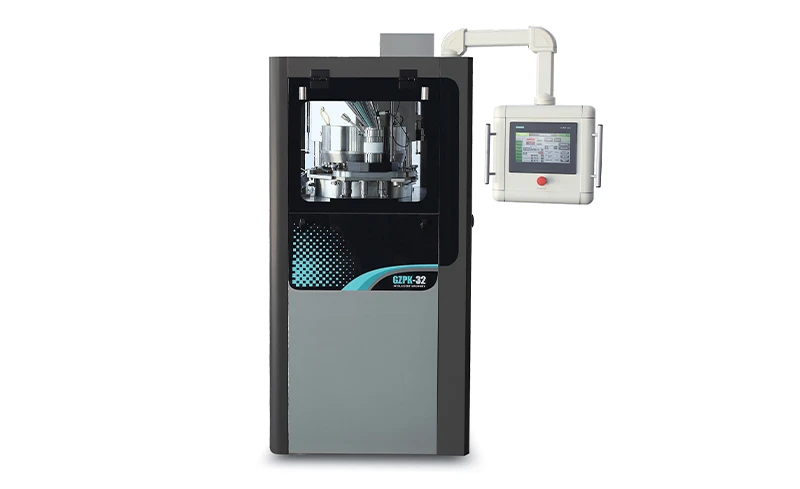
No. of station:26/32/40
Max.tablet diameter:25/16/13mm
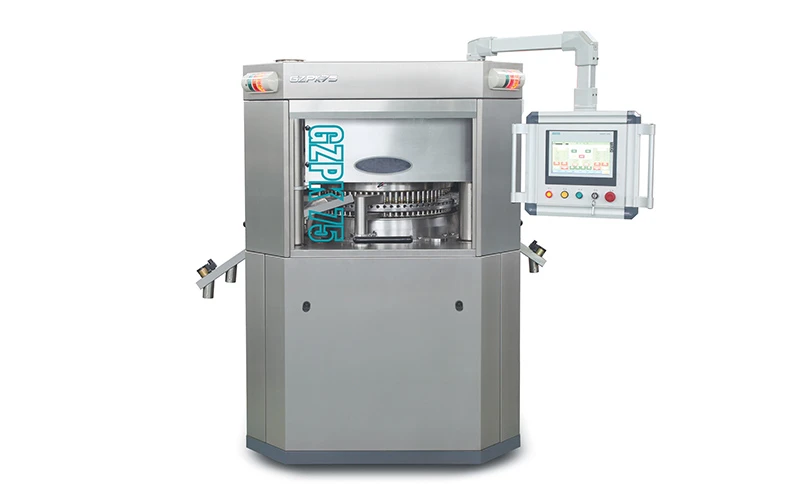
No. of station:45/55/75
Max.tablet diameter:25/16/13mm
24/7 Online Technical Support
One-Year Warranty and Spare Parts Coverage
Lifetime free technical consulting service
GET A QUOTE