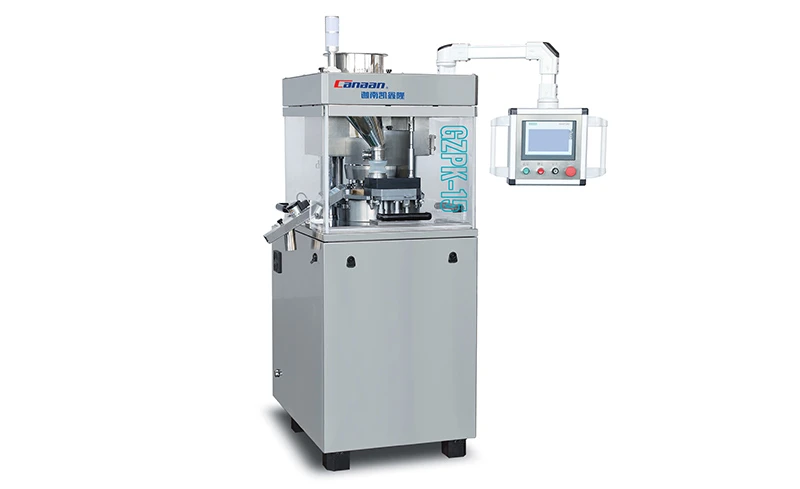
If you're in the pharmaceutical or nutraceutical business, the first question you probably asked today is: "Which capsule filling machine actually cuts downtime without killing my batch flexibility?" The short answer? It depends entirely on your production rhythm. Rotary capsule filler intermittent capsule filler both have loyal followings, but the wrong choice can quietly eat 12-15% of your annual output in changeover losses alone. Let's walk through what actually matters on the factory floor.
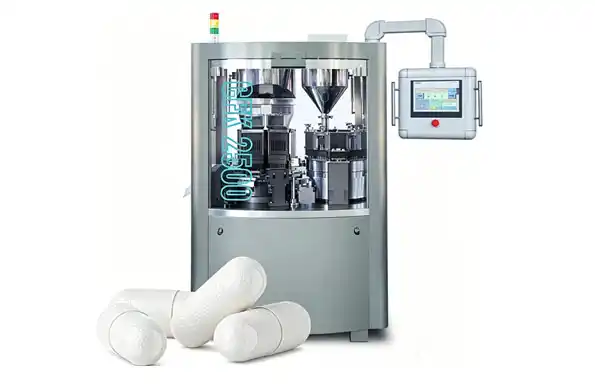
Most buyers fixate on "capsules per minute" first. That's a trap. A machine pumping 150,000 capsules per hour means nothing if you're stopping every 45 minutes to clear jams or recalibrate for a different powder blend. High-volume operations often chase rotary systems because they offer continuous motion—less starting and stopping, smoother handling of fine powders. But here's the kicker: rotary machines hate frequent product changes. Each switch can take 90 minutes or more, and if you run small batches (under 50,000 capsules), that changeover time might exceed your actual run time.
I've watched supplement startups bleed money on rotary systems designed for pharma giants. One client in Toronto swapped from rotary to intermittent after six months—not because the rotary failed, but because their product mix required 14 changeovers weekly. The intermittent filler's tool-less swap system paid for itself in three weeks.
Let's talk about dosing accuracy because that's where promises get expensive. Rotary fillers typically hold tamping pin consistency within ±2% for free-flowing powders. Impressive. But throw in a hygroscopic ingredient or a sticky extract, and that number can double. Intermittent machines handle tricky materials better because they pause—each station completes its cycle before moving. That extra millisecond of dwell time allows vacuum-assisted dosing to pull stubborn powders into place.
Consider your labor skill level. A rotary filler demands operators who understand cam timing and vibration tuning. Intermittent units? My team trained three new hires in four hours last quarter. The machine's logic is simpler: fill, tamp, seal, eject. No continuous synchronization between rotating turrets and powder hoppers.
Here's where things get practical. Imagine you're running a contract manufacturing business. Tuesday morning: 80,000 vegan capsules with a rice flour base. Tuesday afternoon: 40,000 gelatin capsules containing an oil-absorbed herbal extract. Wednesday: 120,000 standard two-piece capsules with direct compression blend.
A rotary capsule filler would punish you. Each changeover means:
Draining and cleaning the powder hopper (25 min)
Replacing tamping pins and dosing discs (40 min)
Revalidating fill weights (15 min minimum)
Adjusting seal station heat if capsule type changes (20 min)
That's nearly two hours between runs. An intermittent system cuts that to 25 minutes total. The trade-off? Slower peak speed—usually 40-60% of a rotary's max rate. But if your average batch is under 200,000 capsules, the math flips.
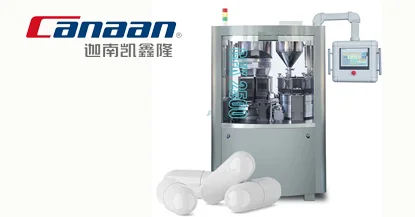
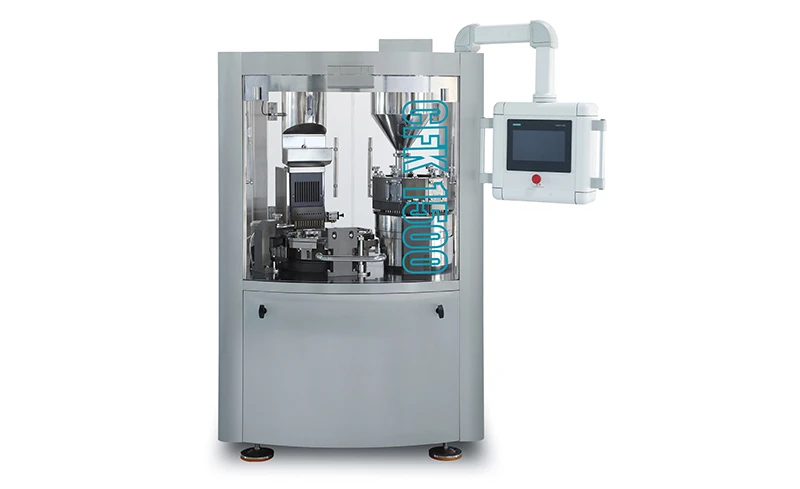
Instead of forcing buyers into an either-or decision, Kaixinlong engineered their platform around what actually causes downtime: tooling access. Many conventional machines lock you into fixed dosing positions with limited configuration options. Kaixinlong's NJP-3500C changes this with a 25-segment bore design that accommodates capsule sizes from 00# to 5# on a single platform. That's not just a spec sheet number—it means you're not swapping entire turrets when your product mix shifts from large herbal formulations to small-dose pharmaceutical blends.
The engineering behind this flexibility starts with the intermittent rotary mechanism that Kaixinlong has refined across their NJP and CFK series. Unlike pure rotary designs where every station moves continuously—making powder flow consistency a constant battle—the intermittent approach pauses at each station. That dwell time allows vacuum-assisted dosing to stabilize before the next index. The CFK-3500C pushes this further with a closed station turntable that prevents powder migration into bearing assemblies, a failure point I've seen shut down rotary lines for entire shifts.
What impressed me during a facility walk-through was their attention to changeover realities. The three-dimensional adjustment mechanism on the CFK series maintains uniform clearance across batch sizes without shimming or recalibration. Standard machines from other vendors often require partial disassembly just to switch between powder filling and pellet filling applications. Kaixinlong's design keeps the dosing station accessible—operators can clean and reconfigure without pulling the main turret.
The automatic capsule filling machine line doesn't force you to choose between speed and adaptability because the mechanical architecture was designed around real production floors—not just ideal conditions. Filling accuracy holds within ±2.5% to ±5% across the full capsule size range, which is the industry standard for intermittent motion systems. More importantly, the high-precision indexing box provides the smooth indexing needed for consistent dosing tampering while keeping noise levels under 80dB(A).
For contract manufacturers running small batches of nutraceuticals or pharmaceuticals, the ability to switch between capsule sizes without losing a morning to changeover isn't a luxury—it's the difference between profitable runs and losing money on setup time.
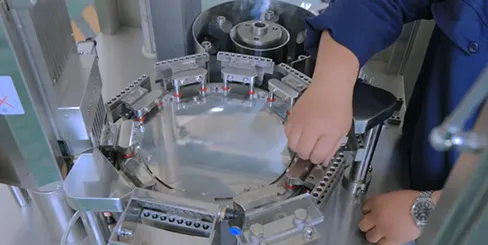
Here's what seasoned production managers whisper about: parts availability. Rotary fillers use proprietary cam tracks and bearing assemblies. If a cam follower fails, you're often down for a week waiting on German or Italian shipments. Intermittent machines share more components with standard industrial automation—think SMC cylinders, Mitsubishi servos, common roller bearings. Your local industrial supply might save you.
But don't assume all intermittent fillers are equal. The sealing station design varies wildly. Cheap units use a single heat plate that creates inconsistent banding across the capsule bed. Better designs, including the automatic capsule filling machine from Kaixinlong, use independently zoned heaters that compensate for ambient temperature shifts. That matters more than you think. A 5°C drop in your facility overnight can change capsule sealing rates by 12% on poorly designed machines.
Stop comparing brochures. Ask these instead:
What's your true batch size range? Under 100K capsules? Intermittent wins. Over 500K with <3 changeovers weekly? Rotary pulls ahead. In between? Check the modular configurations that blend both approaches.
How variable are your powder properties? Run a Hausner ratio test on your top five formulations. Above 1.25 (poor flow)? Intermittent's pause-and-dose cycle handles it better.
Who fixes it when it breaks? Ask for a parts price list before purchasing. Rotary cam tracks often cost $1,800+ and take 15 days. Intermittent cylinders: $120, next-day air.
No machine is universally better. Rotary systems dominate mass production of standard gelatin capsules with consistent powders. Intermittent fillers shine for R&D labs, contract manufacturers, and anyone running high-SKU portfolios. The smart money looks at changeover time as a production cost, not just machine speed.
If your team values predictable scheduling over theoretical max output, start with intermittent. You can always add a rotary later for your top three SKUs. But starting with rotary when you have 20+ products? That's how machines end up collecting dust while operators manually hand-fill capsules during changeover hell.
Want to see how a hybrid approach compares with your actual batch log? Request a formulation-based analysis using your six-month production data—no generic quotes, just a spreadsheet comparing runtime, changeover, and consumable costs across both architectures.

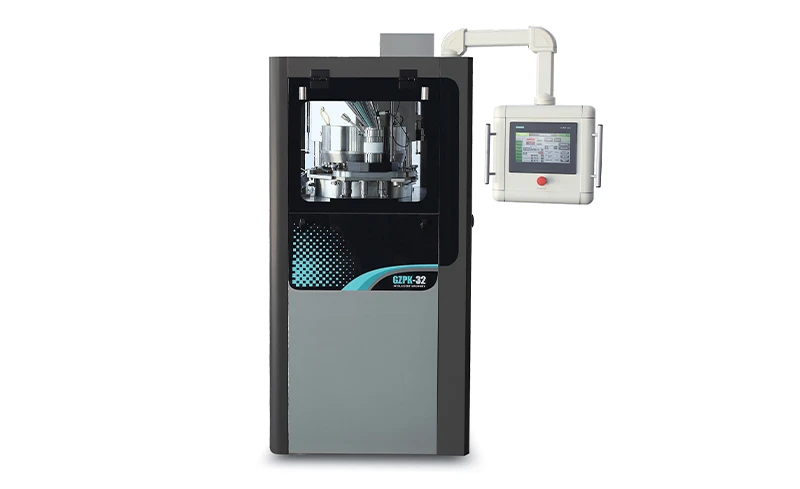
No. of station:26/32/40
Max.tablet diameter:25/16/13mm
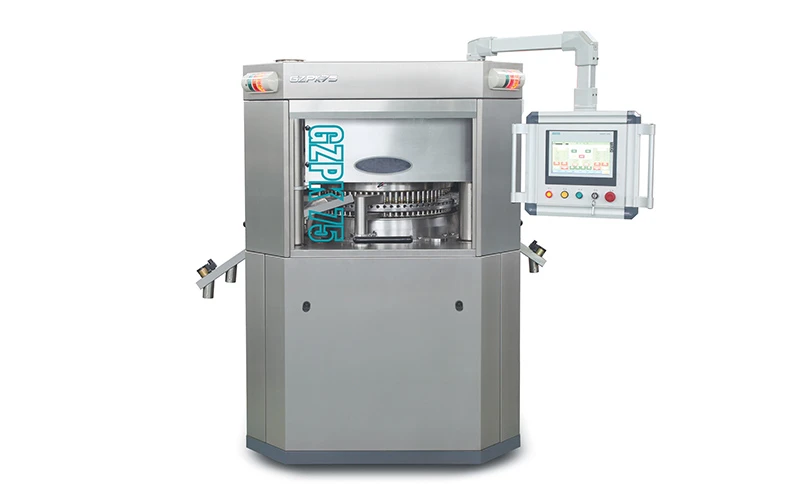
No. of station:45/55/75
Max.tablet diameter:25/16/13mm
24/7 Online Technical Support
One-Year Warranty and Spare Parts Coverage
Lifetime free technical consulting service
GET A QUOTE