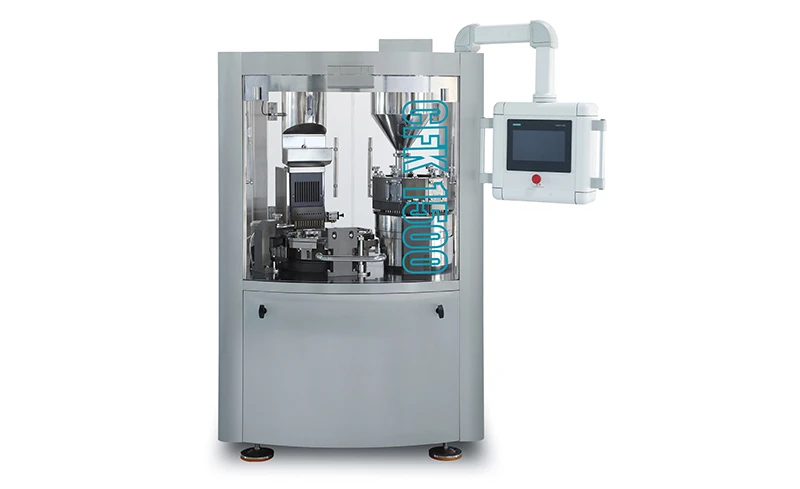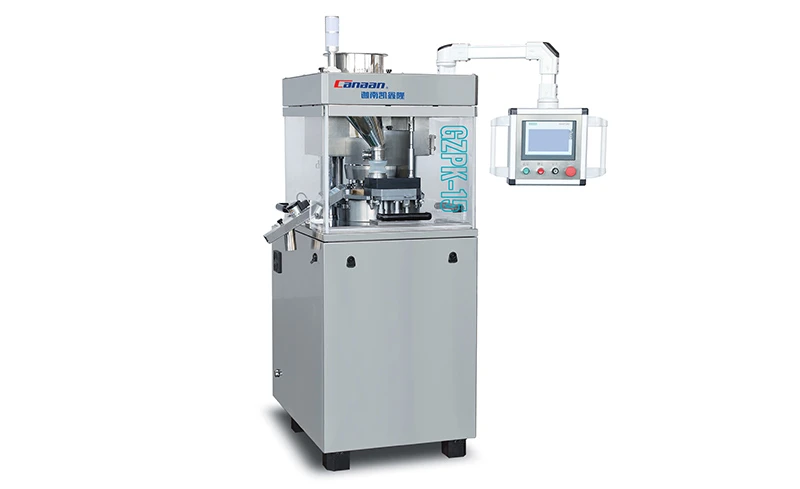
You have a formulation—maybe a fine herbal extract powder, or perhaps small coated pellets for a controlled-release supplement. Now you need to encapsulate it efficiently, without waste or frequent jams. But not every capsule filling machine handles both forms equally well. Choosing between a powder-focused or pellet-capable system means understanding how each technology interacts with your material’s physical behavior.

This article explains the key differences in filling principles, typical accuracy ranges, and practical trade-offs. By the end, you will have a clear decision framework to match machine capabilities with your product needs.
Powders flow, compact, and may create dust. Pellets or granules are larger, free-flowing, but can be crushed or bounce out of a dosing disc. A machine designed for one often struggles with the other without significant modification.
Most automatic capsule fillers rely on one of three filling principles:
Dosator/tamping pin (plug filling): A pin compacts powder into a plug, then transfers it into an empty capsule. This works well for powders but can damage pellets.
Vacuum/suction filling: Powder or pellets are drawn into a metering tube or disc. Pellets may be picked up unevenly due to size variation.
Gravity/cup filling: Pellets or large granules fall directly into a dosing cup. This is gentler but less precise for fine powders.
According to a technical guidance document from the International Society for Pharmaceutical Engineering (ISPE), “material flow properties (angle of repose, compressibility, and particle size distribution) are the primary determinants of filling method suitability” for encapsulated dosage forms.
This means: your first decision is not which machine brand to buy, but which filling principle your material requires.
The table below compares key operational differences. Note that no single machine excels at both extremes unless designed with modular, tool-less changeover parts.
| Feature | Powder-Focused Machine | Pellet/Granule-Capable Machine |
|---|---|---|
| Typical filling principle | Tamping pin / dosator (compression-based) | Cup/gravity or vacuum disc (volume-based) |
| Fill accuracy range | ±1% – ±2.5% (stable powders) | ±3% – ±5% (depends on pellet size uniformity) |
| Gentleness on material | Low compression may crush pellets | High – no compression, free fall |
| Dust generation | Moderate to high (sealing needed) | Low |
| Changeover time to other material types | 30–90 minutes (parts cleaning, pin adjustment) | 15–45 minutes (if cup/disc is modular) |
| Typical max output (capsules/hour) | 100,000 – 450,000 | 60,000 – 200,000 (pellet size dependent) |
Real-world implication: A machine that claims to handle both “all powders and pellets” often delivers acceptable but not excellent performance for one category. If your core product is a fine powder (e.g., 80% passes through 100 mesh), a tamping-pin design gives better weight consistency. If your main SKU is a multiparticulate pellet system (e.g., 0.5–1.5 mm beads), choose a gravity or vacuum cup design to avoid crushing.
Use this step-by-step checklist. Do not skip the test phase—small-scale trials prevent expensive mismatches.
Powder: Does it flow freely? Does it compact easily? Is it hygroscopic or dusty?
Pellet/granule: What is the average particle size? What is the hardness (will it break under 5–10 N compression)?
Mixed portfolio: Do you need to run both types weekly, or once per quarter?
Powders: Many solid-dose supplement contracts require ±2–3% weight variation. Tamping-pin machines routinely achieve ±1% for well-characterized powders. A 2023 analysis published in the Journal of Pharmaceutical Sciences (Vol. 112, Issue 7) notes that “for powders with Carr’s index < 25%, dosator filling gives the lowest coefficient of variation.”
Pellets: If your pellet size varies by more than ±5%, expect higher fill variation (±4–6%). Pellet-capable systems prioritize gentle handling over extreme precision.
Changing from a powder recipe to a pellet recipe can require exchanging the dosing disc, resetting pin depth, or even replacing the filling module. Ask:
Will your operators perform changeovers daily, or once per month?
Do you have documented SOPs and calibrated tools for each configuration?
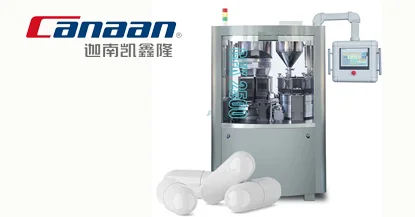
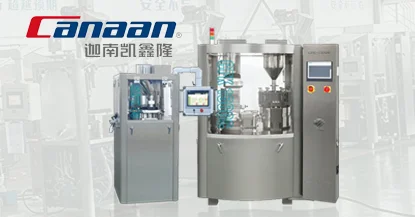
For production environments where frequent changeovers between powder and pellet runs are planned, explore how modular filling platforms are engineered — you can see design principles in the Kaixinlong capsule filling machine series → (open as reference for mechanical architecture).
No specification sheet replaces physical testing. Send a 2–5 kg sample of your powder and your pellets to the equipment manufacturer or a contract lab. Measure:
Fill weight RSD (relative standard deviation)
Capsule sealing integrity (no powder leakage or pellet jamming)
Cleanliness after run (powder dust inside the machine vs. pellet residue)
Key need: Consistent fill weight at 150,000+ capsules/hour, low dust emission to meet GMP standards, quick cleaning between different powder blends.
Machine direction: Powder-optimized tamping-pin design with dust extraction ports and sealed indexing box.
Decision factor: Accuracy (±1%) and uptime matter more than pellet capability.
Key need: Gentle transfer to avoid pellet crushing, ability to run small batches (50,000 capsules), modular changeover between pellet sizes.
Machine direction: Pellet-capable gravity or cup filler with adjustable dosing volume and soft capsule opening/closing mechanism.
Decision factor: Material preservation and changeover speed outweigh maximum speed.
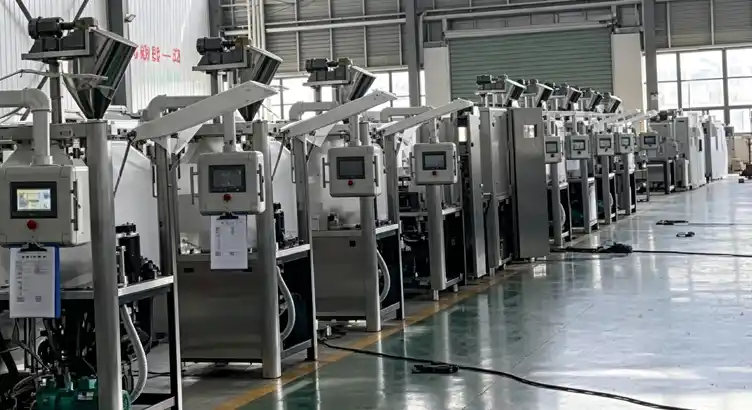
For unique production requirements like multi-pellet filling or low-dose powder encapsulation, see how customized configurations are approached in the solutions overview for pharmaceutical production lines →.
By now, you have clarified whether your primary material behaves like a free-flowing powder, a compactable powder, or a fragile pellet/granule. You also know which accuracy range your quality department requires, and how often you will switch between material types.
With these decision factors in hand, comparing specific equipment becomes straightforward. For powder-dominant production, evaluate models with intermittent rotary indexing and sealed tamping stations. For pellet-dominant lines, prioritize adjustable vacuum or cup filling systems with documented gentle handling data.
The same brand may offer both architectures in different series. The goal is to match the filling principle to your material, not the brand name alone.
To understand how modern indexing systems affect long-term fill consistency regardless of powder or pellet use, read the technical comparison: indexing box wear and fill weight variation – key insights → (select the relevant article from the blog section).
How to validate fill weight accuracy during capsule machine commissioning
Dust containment strategies for high-potency powder filling – GMP considerations
Pellet size distribution limits for vacuum cup fillers – what manufacturers don’t always publish
Preventive maintenance intervals for tamping pin vs. gravity filling modules
Single-station vs. double-station capsule fillers: which architecture suits batch sizes under 200k units?

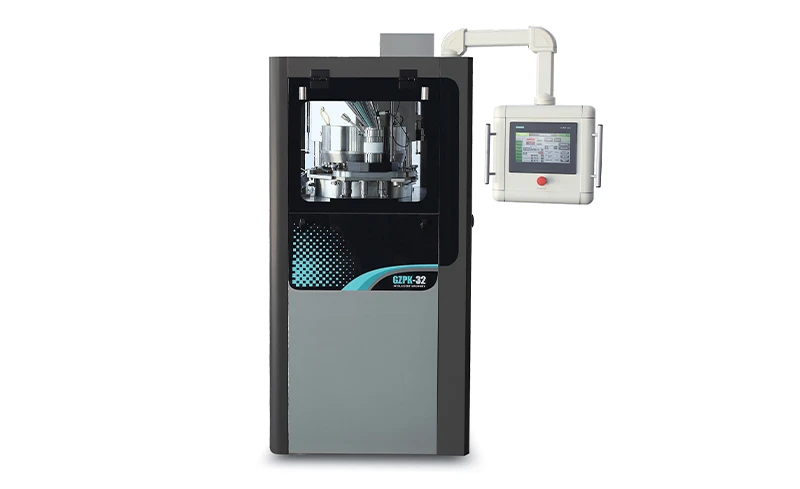
No. of station:26/32/40
Max.tablet diameter:25/16/13mm
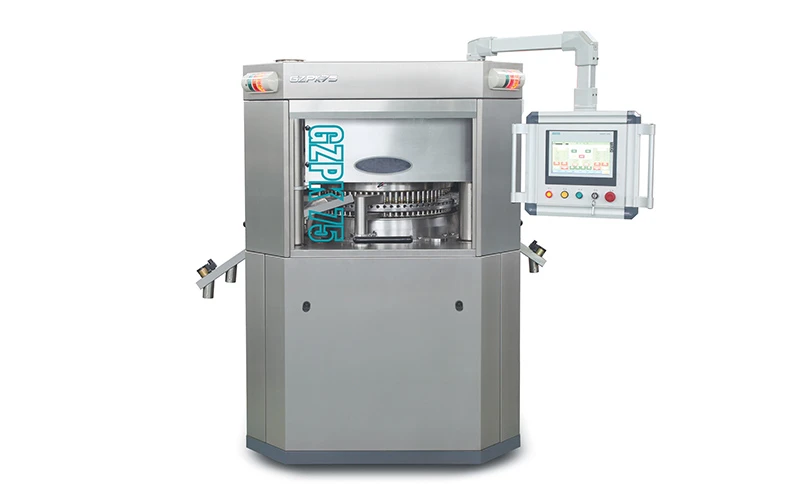
No. of station:45/55/75
Max.tablet diameter:25/16/13mm
24/7 Online Technical Support
One-Year Warranty and Spare Parts Coverage
Lifetime free technical consulting service
GET A QUOTE