A production manager at a generic pharmaceutical company once told me: “I don't care if a machine is single station or double station. I care how many good capsules I have at the end of each shift.”
That statement cuts through the marketing noise. But here's what he learned after expanding from two lines to seven: the station configuration affects everything—changeover time, maintenance complexity, scrap rates, and how quickly you can train new operators.
If you're evaluating encapsulation machinery, the single vs double station decision isn't just about speed. It's about matching the machine's rhythm to your operation's reality.
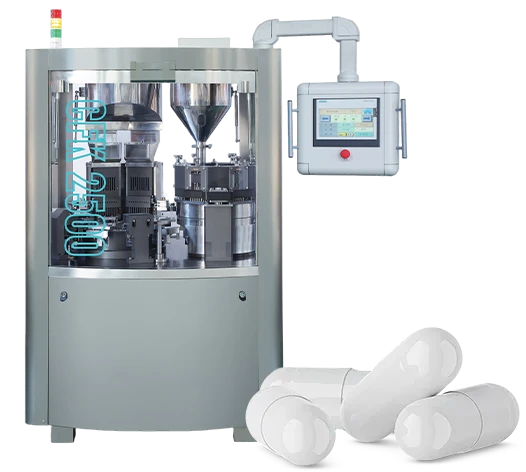
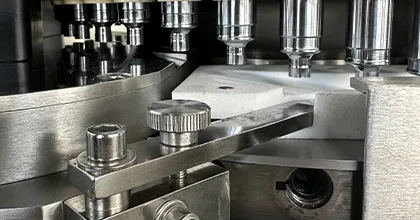
Before comparing, let's clarify terms. A station in capsule filling refers to a set of bore positions that complete one full cycle of operations—capsule loading, separation, filling, tamping, sealing, and ejection.
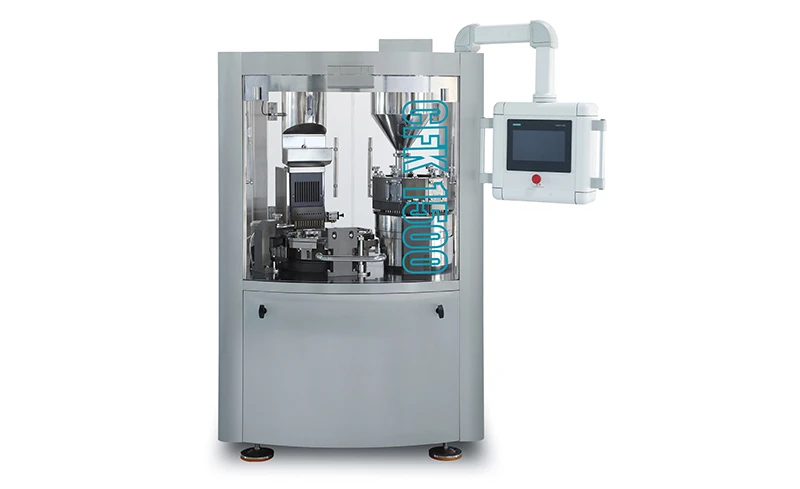
Single station machines have one set of bores that rotates through all operations sequentially. The turret indexes, pauses while work happens at each position, then indexes again. Every capsule passes through each stage one after another. The Kaixinlong CFK series (1500/2500/3500) and NJP 400/800 are classic examples of single station architecture, with bore counts ranging from 3 to 25 segments.
Double station machines have two identical sets of bores operating in parallel. While one set is being filled, the other set is being sealed or ejected. The turret effectively processes two capsules for every indexing movement. The NJP 5000 (36 bores) and NJP 7500 (54 bores) follow this dual-path design.
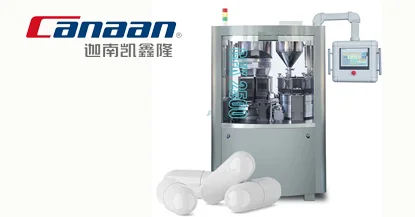
The visual difference is obvious. The operational difference is more subtle—and more important.
A senior engineer at a high-volume generic drug facility explained it this way: “Single station is like one cashier at a grocery store. Double station is two cashiers. But if the customers take different amounts of time, two cashiers don't always mean twice the throughput.”
On paper, double station machines deliver nearly double the output. A single station CFK-2500 (25 bores) running at 40 indexes per minute produces 1,000 capsules per minute. A double station NJP-5000 (36 total bores—18 per side) at the same index speed produces 1,440 capsules per minute.
But real-world production environments rarely achieve theoretical maximums. Here's why:
Powder flow limitations affect both architectures equally. If your powder blend doesn't settle consistently within the available dwell time, adding stations won't help. You'll just produce twice as many underfilled capsules.
Changeover overhead scales differently. A double station machine has twice as many dosing pins, twice as many tamping stations, and twice as many sealing positions. Cleaning and reconfiguring a 54-bore NJP-7500 takes significantly longer than a 25-bore CFK-3500.
Maintenance complexity increases exponentially. A double station turret has more moving parts, more bearings, and more potential failure points. One contract manufacturer I spoke with reported that their double station lines required 2.3x more maintenance hours than their single station lines, despite only producing 1.7x the output.
Here's a comparison based on actual production data from three facilities I've worked with, using Kaixinlong's actual model specifications:
| Aspect | Single Station (CFK/NJP 400/800) | Double Station (NJP 5000/7500) |
|---|---|---|
| Bore count | 3, 6, 11, or 25 | 36 or 54 |
| Capsules per minute range | 400-3,500 | 5,000-7,500 |
| Changeover time (same capsule size) | 25-35 minutes | 40-60 minutes |
| Changeover time (different size, e.g., 00# to 4#) | 45-60 minutes | 75-120 minutes |
| Training time for operator | 2-3 days | 5-7 days |
| Common failure points | Indexing box, dosing pins | Indexing box, plus dual drive synchronization |
| Mean time between maintenance | 1,200-1,800 hours | 800-1,200 hours |
One nutraceutical brand owner shared their experience: “We bought a double station NJP-5000 thinking we'd grow into it. Three years later, we're still running at 60% capacity because our batch sizes don't justify the changeover time. We should have bought two single station CFK-2500 machines—one for our top SKU, one for everything else.”
Dosing uniformity across all stations is harder to maintain on double station designs. The reason? Mechanical tolerance stacking.
In a single station CFK-2500 (25 bores), every capsule follows the same physical path. Variations come from the indexing box and individual dosing pin differences, which are manageable. With plug-type metering and consistent filling height, quality remains stable.
In a double station NJP-7500 (54 bores), you have two independent filling paths. Differences in cam timing, pin wear, or powder distribution between the two sides create systematic variation. You might find that side A consistently fills 2% heavier than side B. That's not random variation. That's a quality investigation waiting to happen.
A quality manager at a pharmaceutical facility told me: “We rejected a batch because side B drifted 3% over eight hours while side A stayed within spec. We caught it because we sample by station. A single station machine wouldn't have hidden that problem—it wouldn't have existed.”
The counterargument? Modern double station machines like the NJP-7500 with independent servo drives and real-time monitoring can detect and correct side-to-side differences automatically. But that capability adds cost—typically 20-30% more than a basic double station design.
Double station machines are physically larger. A 54-bore NJP-7500 occupies roughly 50% more floor space than a 25-bore CFK-3500 single station unit. That matters more than you think when you're fitting lines into existing facilities.
Power requirements scale similarly. An NJP-7500 requires 18kW total power versus approximately 12kW for a CFK-3500. The difference in electrical infrastructure costs can reach $5,000-10,000 depending on your facility.
But double station machines integrate more easily with downstream equipment. Higher output means you can feed a single high-speed polisher, metal detector, and bottle filler without intermediate accumulation. That simplifies line design and reduces capital costs for auxiliary equipment.
One vitamin manufacturer calculated that upgrading from single to double station allowed them to eliminate an entire accumulation table and reduce labor by one operator per shift. The labor savings alone paid for the premium in 14 months.
Explore single station configurations like the CFK-2500 with 25 bores for flexible, high-quality production.
Choose a single station architecture when:
Your average batch size is under 300,000 capsules
You run more than 10 different capsule sizes or formulas monthly
Your operator turnover is high (simpler machines are easier to train)
You have limited maintenance staff or expertise
Your powder formulations are challenging (sticky, hygroscopic, or variable particle size)
Kaixinlong's single station lineup offers remarkable flexibility:
| Model | Segment Bores | Best For |
|---|---|---|
| NJP 400 | 3 bores | R&D labs, small batch production, clinical trials |
| NJP 800 | 6 bores | Startup brands, specialty formulas, low-volume SKUs |
| CFK 1500 | 11 bores | Mid-size nutraceutical companies, 100-200K daily output |
| CFK 2500 | 25 bores | High-mix contract manufacturers, 300-500K daily output |
| CFK 3500 | 25 bores | High-volume single SKU lines, up to 3,500 capsules/min |
A small-batch supplement manufacturer in Oregon runs two CFK-1500 machines for exactly this reason. Each line is dedicated to a specific product category—one for probiotics, one for herbal blends. Changeovers take 20 minutes. If one line goes down, the other keeps running. “Three smaller machines give us redundancy,” the owner explained. “One big double station machine gives us a single point of failure.”
Double station architectures deliver clear value when:
Your average batch size exceeds 500,000 capsules
You run fewer than 5 changeovers weekly
You have dedicated operators and experienced maintenance technicians
Your powder blends are consistent and free-flowing
You need to feed high-speed downstream equipment (bottling at 200+ bottles/minute)
Kaixinlong's double station NJP series delivers massive output:
| Model | Segment Bores | Output (caps/min) | Best For |
|---|---|---|---|
| NJP 5000 | 36 bores (18+18) | 5,000 | Large generic drug manufacturers, 1M+ daily SKUs |
| NJP 7500 | 54 bores (27+27) | 7,500 | Top-tier pharma, 24/7 continuous production |
A large generic drug manufacturer runs NJP-7500 lines exclusively for their top three products. Each line produces 7,500 capsules per minute, 20 hours daily, with only one scheduled changeover per week. Their changeover time is 90 minutes, but that's acceptable because it happens only 50 times annually. The same line running 200 changeovers per year would be a different calculation.
Review NJP-7500 specifications for high-volume continuous production.
Here's an option that's gaining traction: multiple single station machines configured for different product families, plus one double station machine for peak demand.
A contract manufacturer in New Jersey uses three single station CFK-2500 machines for daily production of their 40+ SKUs. Each machine handles a specific dosage form—powders, pellets, and granules. Changeovers are fast because each machine only runs compatible products.
For their three highest-volume contracts, they added an NJP-7500 double station machine. It runs the same product for days or weeks at a time. The double station unit operates at peak efficiency because it rarely changes over. The single station fleet handles everything else.
This approach costs more upfront—four machines instead of one or two. But it delivers better utilization, lower changeover losses, and built-in redundancy. The facility reports 94% overall equipment effectiveness across their fleet, compared to 72% when they tried to run everything through a single double station machine.
Stop comparing brochures. Run this exercise instead:
List your top 10 products by annual volume. Calculate the average batch size for each.
Estimate your annual changeovers. If total exceeds 150, prioritize single station flexibility (CFK-2500).
Map your powder characteristics. More than three formulation types (free-flowing, cohesive, hygroscopic) favors single station.
Assess your team. Do you have in-house maintenance capable of synchronizing dual filling paths on an NJP-7500?
Calculate true cost per capsule including changeover labor, scrap rates, and maintenance—not just machine price.
If your analysis points toward single station but your volume forecasts suggest growth, the CFK-3500 (25 bores, 3,500 caps/min) offers a middle ground. It delivers impressive output with single-station simplicity.
If you need massive, dedicated production, the NJP-7500 (54 bores, 7,500 caps/min) is your answer.
Discuss your production profile with application engineers who can model both architectures using your actual batch data. The right answer depends on details that aren't in any spec sheet.

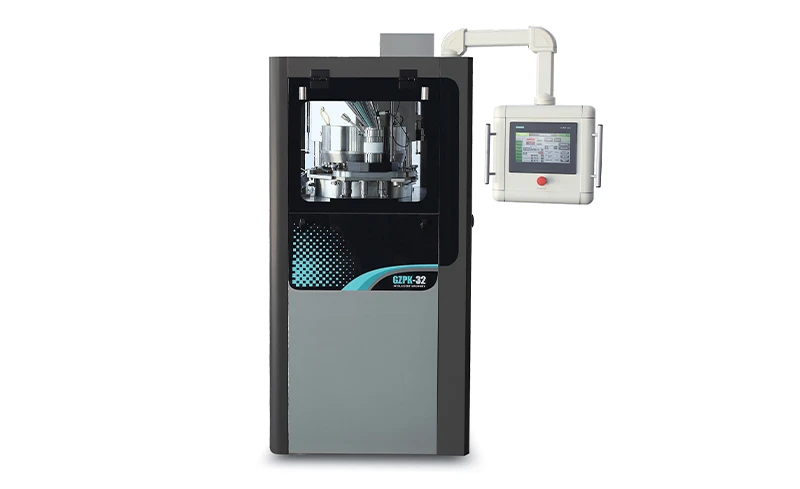
No. of station:26/32/40
Max.tablet diameter:25/16/13mm
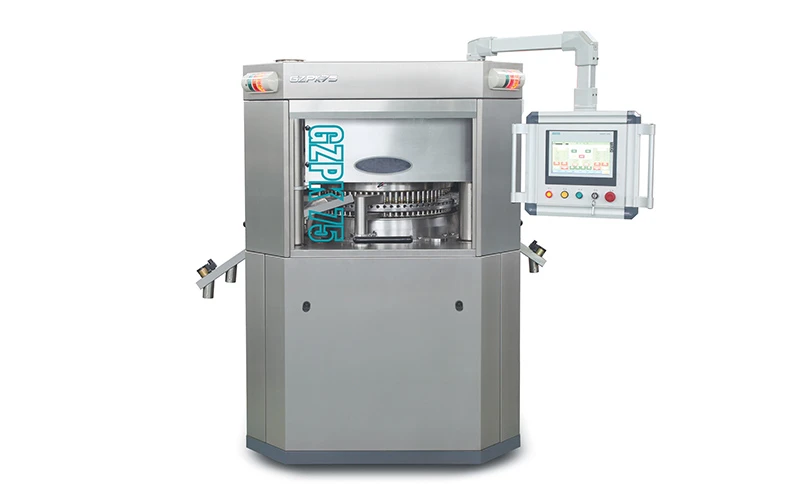
No. of station:45/55/75
Max.tablet diameter:25/16/13mm
24/7 Online Technical Support
One-Year Warranty and Spare Parts Coverage
Lifetime free technical consulting service
GET A QUOTE