You have a powder formulation and a vision for finished capsules. But between the raw material and the sealed product lies a series of interconnected processes—each with its own equipment, quality checkpoints, and potential failure points.
A complete capsule filling line is more than just a filling machine. It encompasses powder preparation, capsule filling, post-filling treatment, and final packaging. Understanding how these stages connect helps you plan your production layout, anticipate bottlenecks, and ensure consistent product quality from start to finish.
This article walks through the complete capsule filling line—from powder blending to sealed capsules ready for packaging—explaining what happens at each stage and why it matters for your final product.
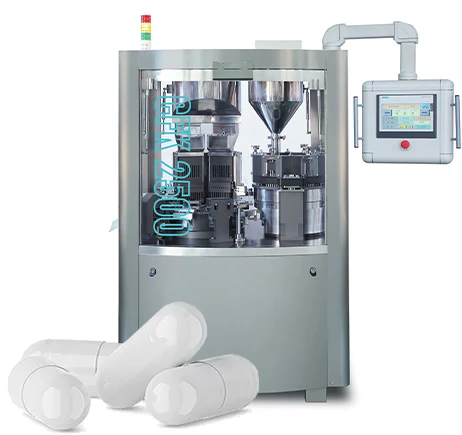
A typical capsule production line consists of four major stages:
| Stage | Primary Equipment | Key Objective |
|---|---|---|
| 1. Powder Preparation | Blender / Mixer, Granulator | Achieve homogeneous blend with consistent flow properties |
| 2. Capsule Filling | Automatic Capsule Filling Machine | Dose powder/granules into empty capsules with precision |
| 3. Post-Filling Processing | Polisher, Metal Detector, Sorter | Remove excess powder, detect contaminants, reject defects |
| 4. Packaging | Counting Machine, Blister/Bottle Packager | Package finished capsules for distribution |
According to WHO GMP guidelines, the manufacturing and filling processes for capsules should meet the requirements of good manufacturing practices, with very broad guidelines concerning the main critical steps to be followed during production. The ISPE Baseline Guide on Oral Solid Dosage Forms covers pharmaceutical facilities for the manufacture of OSD forms, including tablets, capsules, and general powders.
Before any capsule can be filled, the powder or granule formulation must be prepared. This stage determines the flow properties and consistency that will later affect fill weight accuracy.
Raw materials—active pharmaceutical ingredients (APIs), excipients, binders, lubricants, and glidants—must be blended to achieve a homogeneous mixture. Inadequate blending leads to content uniformity issues that cannot be corrected later in the process.
For powders that do not flow well, granulation transforms fine powder into free-flowing granules. This improves flowability and reduces segregation during the filling process. As one industry source notes, for powder-filled capsules, the process includes measuring and mixing ingredients, with granulation as an optional step.
The quality of powder preparation directly determines:
Fill weight consistency: Poor flow leads to higher RSD
Content uniformity: Inadequate blending means inconsistent API distribution
Machine performance: Poor-flow powders cause bridging, jams, and downtime
The filling stage is where empty capsules become filled products. Modern automatic capsule filling machines handle this process through a sequence of precisely timed operations.
On an intermittent rotary capsule filling machine, the following operations occur in sequence:
Capsule feeding: Empty capsules are fed from a hopper into the machine
Capsule separation: Caps are separated from bodies using vacuum
Powder filling: Dosed powder is transferred into capsule bodies
Capsule rejection: Faulty capsules (those that failed to separate or are damaged) are ejected
Capsule locking: Caps are replaced and locked onto bodies
Finished capsule discharge: Completed capsules exit the machine
Die hole cleaning: Empty die holes are cleaned for the next cycle
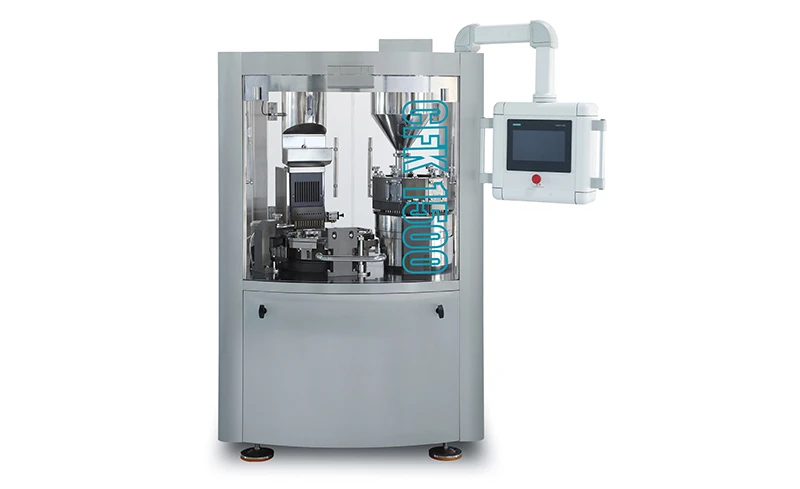
Kaixinlong automatic capsule filling machines integrate precision mechanics with intelligent control systems. Key features include:
Siemens electronic touch screen: Supports quick setup, precise parameter adjustment, real-time monitoring, data logging, and rapid recipe switching
Taiwan Xiangsheng DF series indexing box: High-precision indexing with a highly rigid design ensures accurate and stable capsule production
Intermittent rotary indexing filling: Plug-type metering ensures consistent filling height for each capsule; adaptable to multiple capsule sizes and material types
Mold Quick Change System: Quick mold changes reduce downtime and support production across multiple capsule sizes (00# to 5#)
When evaluating the filling stage, consider:
Fill weight accuracy: What is the documented RSD or tolerance for your target fill weight?
Capsule size range: Does the machine support all capsule sizes you plan to use (00#–5#)?
Changeover time: How quickly can the machine switch between products or capsule sizes?
In-process controls: What systems monitor fill weight during production?
Kaixinlong’s capsule filling machines support filling powder and granules of 00#–5# capsules, with filling error ranges from ±2.5% to ±5% depending on the model.
To see how these technologies are implemented across different capacity ranges, explore the automatic capsule filling machine series.
Once capsules are filled and locked, they are not yet ready for packaging. Post-filling processing ensures that only capsules meeting quality standards proceed to the next stage.
Filled capsules often have excess powder on their outer surfaces—a result of powder dust during filling. Capsule polishers remove this surface powder, ensuring a clean, professional finish before packaging.
Why it matters: Polished capsules look more professional and reduce the risk of powder contamination in packaging equipment. Polishers use a rotating brush concept to remove excessive powder from the surface of capsule shells on a continuous basis.
Metal detectors detect minute particles of metal—ferrous, non-ferrous, and stainless steel—in filled capsules.
Why it matters: Metal contamination can occur from equipment wear (e.g., from milling, blending, or filling machine components). Detecting and removing contaminated capsules protects consumer safety and regulatory compliance.
Modern integrated systems combine capsule polishing and metal detection in a single machine, performing precise capsule polishing and highly sensitive metal detection simultaneously.
Capsule sorters automatically sort out capsules with insufficient fill amount, empty shells, fragments, and separated capsule bodies and caps.
Why it matters: Removing defective capsules before packaging reduces customer complaints and ensures that only quality products reach the market.
A fully integrated post-filling line can include capsule polishing, metal detecting, sorting, and dispensing—all in a small production area. The inlet of the polishing machine can be connected to any type of capsule filling machine, and the outlet can be connected to a capsule sorting device and a metal detector, realizing a complete production line for capsule polishing, elevating, sorting, and detecting.
For a complete view of how auxiliary equipment integrates into a production line, see the solutions overview for pharmaceutical manufacturing equipment.

The final stage transforms finished capsules into packaged products ready for distribution.
Capsule counting machines count finished capsules and fill them into containers—bottles, blister packs, or bulk containers.
Blister packing and bottling lines finish the process, sealing the capsules into retail or bulk formats and adding labels and batch codes.
Packaging protects capsules from moisture, light, and physical damage during storage and transport. It also provides the labeling and traceability information required for regulatory compliance.
Quality control is not limited to a single stage—it must be integrated across the entire capsule filling line.
During filling: In-line weighing, fill weight monitoring, and automatic rejection of off-spec units
After polishing: Visual inspection for surface defects
After metal detection: Rejection of contaminated capsules
Kaixinlong has established a comprehensive traceability system covering the entire process from raw materials to finished products:
Supplier Qualification Audit (100% ISO-certified suppliers)
All raw materials accompanied by complete inspection reports and supplier traceability information
100% inspection of critical moving component fit accuracy (≤0.02mm)
Globally renowned electrical components to ensure 100% equipment stability
According to WHO GMP guidelines, all manufacturing processes should be clearly defined and systematically reviewed, with qualification and validation performed. For capsule production, this means:
Validated filling processes
Documented quality control procedures
Traceable batch records
Compliance with pharmacopoeial standards
A key contribution to the success of pharmaceutical capsule filling processes has been the significant improvement of 100% in-process net weight control systems, ensuring that the perfect amount of product has been filled into the capsule to safeguard patient health.
A complete capsule filling line from powder to sealed typically includes the following equipment in sequence:
| Position | Equipment | Purpose |
|---|---|---|
| 1 | Powder Blender / Mixer | Homogeneous blending of raw materials |
| 2 | (Optional) Granulator | Improve powder flow properties |
| 3 | Automatic Capsule Filling Machine | Dose and seal capsules |
| 4 | Capsule Polisher | Remove surface powder |
| 5 | Metal Detector | Detect and reject metal-contaminated capsules |
| 6 | Capsule Sorter | Reject underfilled, empty, or damaged capsules |
| 7 | Counting Machine | Count capsules for packaging |
| 8 | Blister / Bottle Packaging Line | Seal and label finished product |
The process begins with advanced powder mixing, ensuring homogeneous blending of raw materials. Next, capsule filling machines accurately fill capsules with precision-dosed powders. Post-filling, integrated systems perform polishing, metal detection, and sorting. Finally, counting and packaging complete the line.
You now understand the complete capsule filling line—from powder preparation through filling, post-filling processing, and packaging. The key takeaways:
Powder preparation determines fill quality: Flow properties and blend homogeneity established early affect everything downstream
Filling is the core operation: Choose a machine that matches your capsule size range, material type, and accuracy requirements
Post-filling processing is essential: Polishing, metal detection, and sorting protect product quality and regulatory compliance
Quality control must be integrated: Traceability and in-process controls across the entire line ensure consistent results
Once you have mapped your production requirements across all four stages, you can begin selecting equipment that integrates seamlessly—from powder blending to sealed capsules ready for shipment.
Powder density and flow impact on fill accuracy
Understanding fill weight RSD: acceptable ranges for powders vs pellets vs granules
How to calculate true batch cost including changeover and cleaning time
Frequent downtime? Maintain your indexing box

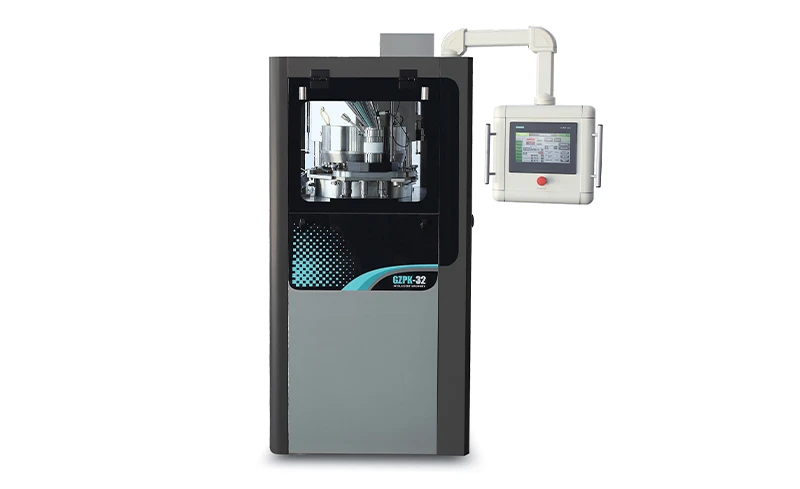
No. of station:26/32/40
Max.tablet diameter:25/16/13mm
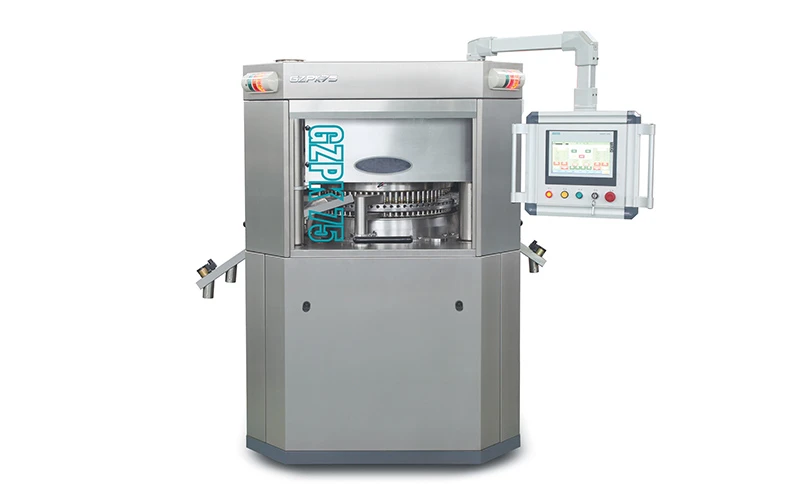
No. of station:45/55/75
Max.tablet diameter:25/16/13mm
24/7 Online Technical Support
One-Year Warranty and Spare Parts Coverage
Lifetime free technical consulting service
GET A QUOTE